Chris Grayling, the Shadow Home Secretary,* said violent crime had risen 70% since 1998-99. He was taken to task by the head of the UK Statistics Authority, Sir Michael Scholar (great name for a stats chief), who said a change in reporting methods produced a false bump. The British Crime Survey says violent crime dropped 41% in the last 12 years. Mr. Grayling then asked the House of Commons library to look into it, and they estimated a 44% increase.
Recently in Studies Category
Chris Grayling, the Shadow Home Secretary,* said violent crime had risen 70% since 1998-99. He was taken to task by the head of the UK Statistics Authority, Sir Michael Scholar (great name for a stats chief), who said a change in reporting methods produced a false bump. The British Crime Survey says violent crime dropped 41% in the last 12 years. Mr. Grayling then asked the House of Commons library to look into it, and they estimated a 44% increase.
Whether marijuana is a dangerous or harmless drug largely depends on what it is compared to and what one deems as acceptable risk. Quite clearly compared to alcohol and cocaine the risks are small: marijuana isn't strongly linked to crime or illness compared to those drugs. But when the assertion is made that marijuana is harmless, that too is clearly wrong: marijuana use is linked not only to mental illness but also pulmonary damage, cognitive impairment, and possibly liver disease. And these points are worth consideration in discussions about marijuana and legal proscriptions irrespective which side of the fence one sits on in terms of prohibition.
In the New York Post, Philip Messing, Larry Celona, and James Fanelli have this disturbing story about cooking the books on crime stats as a result of the data-driven police management system, CompStat.
A story on MSNBC reports the following:
A massive new federal study documents an unprecedented and dramatic decrease in incidents of serious child abuse, especially sexual abuse. Experts hailed the findings as proof that crackdowns and public awareness campaigns had made headway.
An estimated 553,000 children suffered physical, sexual or emotional abuse in 2005-06, down 26 percent from the estimated 743,200 abuse victims in 1993, the study found....
Finkelhor [the study's author], whose own previous research detected a drop in abuse rates, said the study reveals "real, substantial declines" that cannot be dismissed on any technical grounds, such as changing definitions of abuse.
He suggested that the decline was a product of several coinciding trends, including a "troop surge" in the 1990s when more people were deployed in child protection services and the criminal justice system intensified its anti-abuse efforts with more arrests and prison sentences.
OBJECTIVE: Outpatient commitment has been heralded as a necessary intervention that improves psychiatric outcomes and quality of life, and it has been criticized on the grounds that effective treatment must be voluntary and that outpatient commitment has negative unintended consequences. Because few methodologically strong data exist, this study evaluated New York State's outpatient commitment program with the objective of augmenting the existing literature. METHODS: A total of 76 individuals recently mandated to outpatient commitment and 108 individuals (comparison group) recently discharged from psychiatric hospitals in the Bronx and Queens who were attending the same outpatient facilities as the group mandated to outpatient commitment were followed for one year and compared in regard to psychotic symptoms, suicide risk, serious violence perpetration, quality of life, illness-related social functioning, and perceived coercion and stigma. Propensity score matching and generalized estimating equations were used to achieve the strongest causal inference possible without an experimental design. RESULTS: Serious violence perpetration and suicide risk were lower and illness-related social functioning was higher (p<.05 for all) in the outpatient commitment group than in the comparison group. Psychotic symptoms and quality of life did not differ significantly between the two groups. Potential unintended consequences were not evident: the outpatient commitment group reported marginally less (p<.10) stigma and coercion than the comparison group. CONCLUSIONS: Outpatient commitment in New York State affects many lives; therefore, it is reassuring that negative consequences were not observed. Rather, people's lives seem modestly improved by outpatient commitment. However, because outpatient commitment included treatment and other enhancements, these findings should be interpreted in terms of the overall impact of outpatient commitment, not of legal coercion per se. As such, the results do not support the expansion of coercion in psychiatric treatment.Critics of outpatient commitment contend that these programs are not a panacea. And they surely are correct. But the "on the ground" reality of providing care for folks with these difficult issues often comes down to a short range of choices which include some form of involuntary treatment, incarceration, or severe neglect. Out of these options, outpatient commitment has the right aims and accumulating evidence of modest success.
Imagine there was a nasty disease that affected 1 in 100 people. And imagine that someone invented a drug which treated it reasonably well. Good work, surely.Neuroskeptic points out two important points behind these findings. First, the growth of diagnostic labeling and its effects on efficacy studies; second, the limitations of commonly used psychiatric assessment tools such as the Hamilton Rating Scale for Depression.
Now imagine that, for some reason, people decided that 10% of the population need to be taking this drug, instead of 1%. So sales of the drug sky-rocket. Eventually some clever person comes along and asks "This is one of the biggest selling drugs in the world - but does it work?" They look into it, and find that it doesn't work very well at all. For about 9 out of 10 people, it's completely useless! What a crap drug.
But one other point is worth mentioning. All of these studies utilize a statistical method known as meta-analysis. In layman's terms, this technique uses mathematical formulas to quantify the overall effect of numerous studies conducted over time. The key is that the author's of these studies posses enormous discretion in deciding which studies are included and which are excluded. True, they must provide a rationale for their decision-trees, but even with explicit and rational reasons, the result can be a study which examines six studies while excluding over 2,000- while nevertheless claiming to pass judgment on them all.
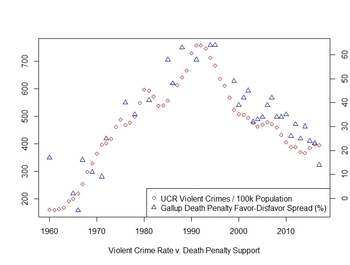
The recession of 2008-09 has undercut one of the most destructive social theories that came out of the 1960s: the idea that the root cause of crime lies in income inequality and social injustice. As the economy started shedding jobs in 2008, criminologists and pundits predicted that crime would shoot up, since poverty, as the "root causes" theory holds, begets criminals. Instead, the opposite happened. Over seven million lost jobs later, crime has plummeted to its lowest level since the early 1960s. The consequences of this drop for how we think about social order are significant.* * *
The recession crime free fall continues a trend of declining national crime rates that began in the 1990s, during a very different economy. The causes of that long-term drop are hotly disputed, but an increase in the number of people incarcerated had a large effect on crime in the last decade and continues to affect crime rates today, however much anti-incarceration activists deny it. The number of state and federal prisoners grew fivefold between 1977 and 2008, from 300,000 to 1.6 million.* * *The spread of data-driven policing has also contributed to the 2000s' crime drop. At the start of the recession, the two police chiefs who confidently announced that their cities' crime rates would remain recession-proof were Los Angeles Police Chief William Bratton and New York Police Commissioner Ray Kelly. As New York Police Commissioner in the mid-1990s, Mr. Bratton pioneered the intensive use of crime data to determine policing strategies and to hold precinct commanders accountable--a process known as Compstat. Commissioner Kelly has continued Mr. Bratton's revolutionary policies, leading to New York's stunning 16-year 77% crime drop. The two police leaders were true to their word. In 2009, the city of L.A. saw a 17% drop in homicides, an 8% drop in property crimes, and a 10% drop in violent crimes. In New York, homicides fell 19%, to their lowest level since reliable records were first kept in 1963.
A drop in property crimes may be unexpected during a recession, as there is some correlation between unemployment and property crimes. However, a drop in violent crimes in such a period should not surprise anyone, as there is no significant correlation to begin with. People do not commit rape and murder because they are in financial need; they do it because they are evil.Preliminary FBI crime figures for the first half of 2009 show crime falling across the country, even at a time of high unemployment, foreclosures and layoffs. Most surprisingly, murder and manslaughter fell 10 percent for the first half of the year.
"That's a remarkable decline, given the economic conditions," said Richard Rosenfeld, a sociologist at the University of Missouri-St. Louis who has studied crime trends.
But there's an additional observation worth noting: the amygdala has become hot again, but what it can explain about human behavior is limited.
Back in the 1990s, the amygdala was all the rage in the explanatory models of schizophrenia (with some renewed interested today). But as of late, the amygdala has become the focus of explanatory models of psychopathic behavior. And while it makes intuitive sense that the amygdala could be (and probably is) involved in both disorders, there's a larger lesson to be learned.
Back in the 1980s and early 1990s (before the widespread use of fMRI) the tool of choice in biological psychiatry was the EEG. Stories were written with much fervor that the EEG could peer inside the brain and explain the mind by describing the electrical impulses detected by the EEG apparatus. Soon, a particular type of brain wave was identified which seemed to have explanatory value in various behavioral models. The P300 wave had been around for a while, but the evolution of psychiatry from its psychoanalytic traditions to one dominated by biological psychiatry was well under way by the 1980s. Before long, researchers found that the P300 wave was abnormal in people with schizophrenia. Then it was observed that the P300 was abnormal in alcoholics, people who abused cocaine, depression, Alzheimer's, smokers, borderline personality disorder... and the list goes on.
The point is not that the P300 models were wrong in the descriptive sense- they were surely right. The issue is what localization models can explain. Inasmuch as the P300 is indeed abnormal in schizophrenia and a myriad of other behavioral disorders, the amygdala is likely involved in various behavioral phenomena as well. What that tells us about why people behave as they do, however, is quite limited and circumspect.
Sentence enhancements may reduce crime both by deterring potential criminals and by incapacitating previous offenders, removing these possible recidivists from society for longer periods. I estimate the incapacitative effect of longer sentences by exploiting a 2001 change in Maryland's sentencing guidelines that reduced the sentences of 23‐, 24‐, and 25‐year‐olds with juvenile delinquent records by a mean of 222 days. I find that, during this sentence disenhancement, offenders were, on average, arrested for 2.8 criminal acts and were involved in 1.4-1.6 serious crimes per person during the period when they would have otherwise been incarcerated. Although my findings are significantly lower than previous estimates of incapacitation, I find that, on the margin, the social benefit of the crimes averted by incapacitation is slightly higher than the marginal cost to the state of imposing a 1‐year sentence enhancement.The only surprise here is "slightly." If keeping 10 recidivists locked up for an additional 222 days each prevents 28 crimes, 15 of which are "serious," that would seem to be well worth the cost.
On page 569, Owens acknowledges that the estimate of the cost of crime she is using may be a lowball. "More recent studies (Cohen et al. 2004; Rockoff and Linden 2006) have suggested that the social cost of crime may be significantly higher."
Even with the low-end estimate of the cost of crime, Owens finds recidivist enhancements to be cost-effective on the incapacitation effect alone. Add the deterrent effect, see, e.g. Kessler & Levitt, Using Sentence Enhancements to Distinguish between Deterrence and Incapacitation, 42 J. Law & Econ. 353 (1999), on top of that, and the case is clear.
Letting habitual criminals out to save money is penny wise and pound foolish.
[T]he American Psychological Association (APA), which claims in this case that scientific evidence shows persons under 18 lack the ability to take moral responsibility for their decisions, has previously taken precisely the opposite position before this very Court. In its brief in Hodgson v. Minnesota, 497 U.S. 417 (1990), the APA found a "rich body of research" showing that juveniles are mature enough to decide whether to obtain an abortion without parental involvement.Since those lines were laid to text, the American Psychological Association has tried to defend its position that when it comes to obtaining an abortion, the scientific evidence shows that adolescents posses the cognitive capacity to make that choice free from parental consent yet when it comes to the criminal punishment, juveniles as a categorical group, are insufficiently mature to be subject to the full range of criminal sanctions available under the law. The article in this month's American Psychologist claims to demonstrate how these positions are compatible despite the robust intuition that they simply can't be.
Simmons at 617 (Scalia, J. dissenting)
If they are foolish enough to keep possession of the roll, though, matching the strip on the victim to the remaining roll can be an important piece of evidence. Bill Lindelof of the SacBee has this story on a UC Davis study on the reliability of such matches.
On the 2009 prizes themselves, they are listed here. The more-or-less crime-related ones are after the jump.