Two federal corrections workers who were on duty the night Jeffrey Epstein killed himself in a Manhattan detention cell have been indicted on federal charges in connection with the disgraced financier's death, according to charges unsealed Tuesday.
Recently in Prisons Category
John F. Pfaff's Locked In: The True Causes of Mass Incarceration and How to Achieve Real Reform is probably the best book on so-called mass incarceration to date. Its great strength is that it is empirically grounded. Pfaff, a professor of law at Fordham, doesn't cherry-pick data to support some a priori theory, he grapples with the hard realities that the data present. As he well understands, this makes his argument for reducing imprisonment a very tough sell.
After all, if violent crime and other serious offenses are the primary reasons for incarceration then why should we reduce imprisonment? And if we still wish to disincarcerate, despite the compelling reasons for all the lockups, then how might this be achieved? Unfortunately, Pfaff's answers to these questions are the least persuasive portions of his book.
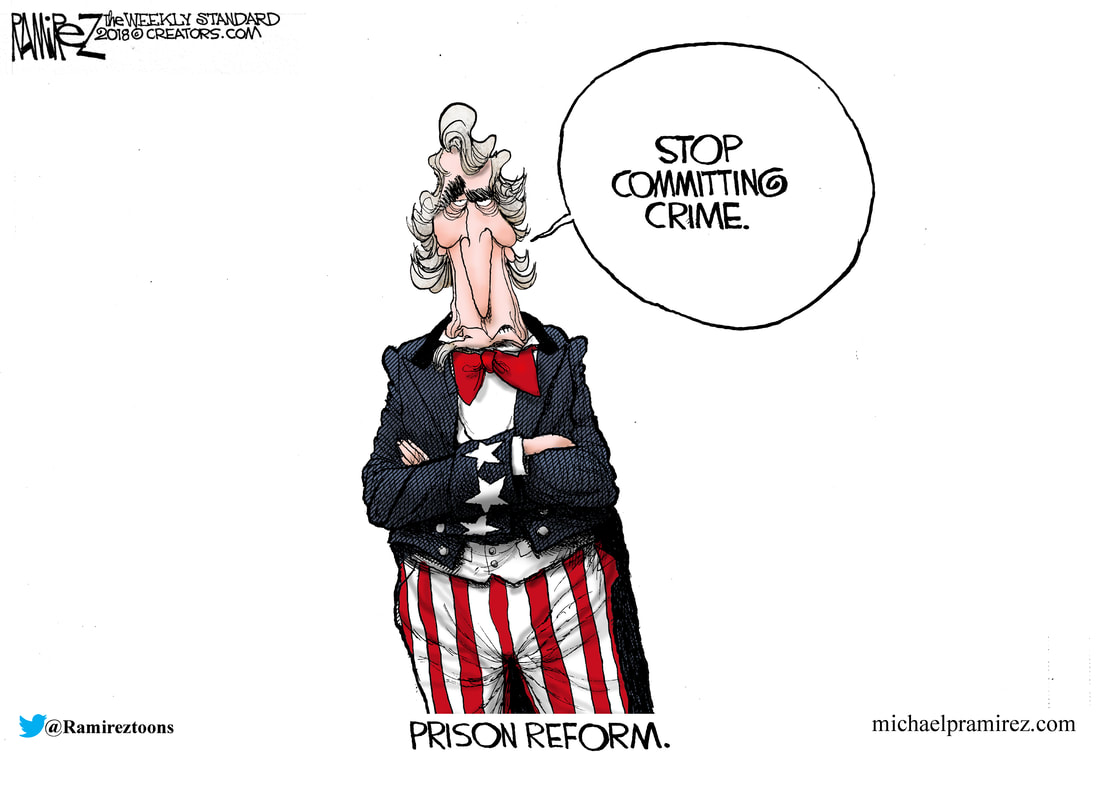
But having passed the First Step Act, lawmakers should be cautious about the next step. Progressives believe that the U.S. overincarcerates and needs to cut back sharply on the number of people in jails and prisons. But the "mass incarceration" claim doesn't withstand much scrutiny.* * *What about overpunishment? Are penalties so harsh that American prisons are filled with men and women who are languishing there for decades because of some youthful indiscretion? That is the image the disincarceration movement wants to conjure up. But it is false.
First, 23% of felons convicted of violent crimes are sentenced to no incarceration whatever. Second, nearly 80% of state prison inmates are released before serving their full terms. If we measure punishment by actual time served, the picture is not disturbing. Some might argue that America has an underpunishment problem.
* * *The risk in the second step of criminal-justice reform is that it goes too far. The justice system, flawed though it is, provides incentives to desist from crime. The weaker it gets, the greater the risk of a significant crime increase. That happened in the late 1960s: When the crime tsunami began, the system caved in. Police arrested fewer offenders, and courts imposed fewer and lighter punishments. That contributed to the 20th century's worst sustained violent-crime wave.
There is a major political push going on to get law enforcement organizations to flip and support the badly drafted and ill-conceived legislation titled the "First Step Act," which I prefer to call the Faux Pas Act. See this post.
The current draft of the First Step legislation remains troubling to the leaders of law enforcement. Sheriffs are elected solely to protect our communities, and Police Chiefs have taken an oath to protect the public. We feel unless the changes recommended below are enacted, this legislation creates a high-risk path for dangerous criminals with gun crime histories to early release from prison. This amounts to a social experiment with the safety of our communities and the lives of Sheriffs, deputies and police officers in the balance. Please know that we did not come to this conclusion lightly. We have been working diligently with the Administration to correct these inequities. It is our hope the Senate will listen to the nation's elected Sheriffs and the Chiefs of Police of our nation's most populous cities.* * *In its current form, we oppose this legislation. However, if these changes can be made to address our concerns, we stand ready to work further with the Senate and the Administration.
The drive to put ever more criminals and more dangerous ones on the streets gathers steam, funded by Soros money on the left and Koch money on the libertarian side, leaving relatively few defenders of the strong and sensible policies that have been a major factor in the tremendous drop in crime since the peak in the early 1990s. Senator Tom Cotton of Arkansas is one of the few, and he has this op-ed in the WSJ with the above headline.
While the House bill has some flaws, the Senate can fix them on a bipartisan basis. But under no circumstances should Congress cut mandatory minimum sentences for serious crimes or give judges more discretion to reduce those sentences. That foolish approach is not criminal-justice reform--it's a jailbreak that would endanger communities and undercut President Trump's campaign promise to restore law and order.