
I have put up several entries about the horrific slashing murders of three African Americans by a drug dealer prematurely, but deliberately, set loose from federal prison under the FSA, Congress's 2010 precursor to the even more sweeping and reckless sentencing proposals now being considered. See, e.g., my posts here, here and here.
As I have noted, the responsibility for this early release travesty starts with Congress but hardly ends there. It was the Sentencing Commission -- already aware of a high repeat-crime rate for drug dealers -- that then decided to give retroactive application to the newly reduced sentences.
As to this particular Ohio murder spree against blacks, responsibility extends to the killer's lawyer (whose name I do not yet know by am trying to find out). The attorney told the court that his client was not a danger to the community -- an assertion that, given the client's previous and (apparently) repeat violent criminal behavior, the lawyer either knew at the time was false, or recklessly disregarded whether it was false or not. All this was compounded when the US Attorney's Office, so it is reported, agreed to the early release motion. Whether it also agreed with the specific false statement that the defendant was not a danger to the community, I don't know.
This case is a scandal. Have we as a country decided that little children rather than adult thugs should bear the unavoidable risks of error -- either too much prison or too little -- in our sentencing laws? If not, this case by itself should end the drive for lower sentences and early release. After all, the question whether children or traffickers should bear the risks of sentencing error answers itself.
Here are the people who, but for Congress's earlier, carefree efforts at sentencing reform, would be alive today.
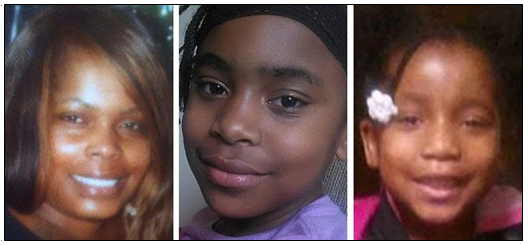


A search on PACER brought up the case, which is 2:06-cr-00146 out of the U.S. District Court for the Southern District of Ohio, Eastern Division.
Callahan's total offense level was calculated at 26 and his criminal history category was calculated at VI at the time he pled guilty to the original convictions (distribution of over 5 grams of cocaine base, and possession of a firearm after previously being convicted of a crime punishable by more than one year). This put his advisory guideline range at 120-150 months. On 4/13/2007 he was sentenced to 150 months on count 1 and 120 months on count 2, to run concurrently.
On 8/28/2008 Callahan's federal public defender, Steven S. Nolder, upon remand from the Sixth Circuit Court of Appeals, filed a motion requesting the district court to resentence Callahan under the new guideline range of 100 - 125 months (Document #33). On 9/5/2008 U.S. Attorney Gregory G. Lockhart filed a motion stating that the "United States is in agreement with the defendant's guideline calculations as set forth in his memorandum" and that the "government would recommend that the Court sentence the defendant within the advisory guideline range of 100 - 125 months" (Document #34). On 9/16/2008 District judge James L. Graham resentenced Callahan to 110 months on counts 1 and 2, to run concurrently.
It would appear that the first reduction was a result of Supreme Court decisions that occurred during the appeal, changes in the sentencing guidelines that occurred during the appeal, a defense attorney that requested a resentence based on those changes, a U.S. attorney that agreed with the request, and a judge that granted the request. It was a number of different actors withing the political system, from different branches, that each had an opportunity to look over the case and make a decision on the request.
On 11/4/2011 Callahan's federal public defender, Steven S. Nolder, filed "Defendant's Motion to Reduce Sentence, Pursuant to 18 U.S.C. S 3582(c)(2), in an "Agreed Disposition Case,"" which starts out:
"Pursuant to 18 U.S.C. S 3582(c)(2), Defendant Callahan, through undersigned counsel, hereby moves this Court for an Order reducing his sentence from 110 months to 100 months based on the retroactive application of the November 1, 2010 crack amendment" (Document #37). The motion goes on to say "[o]n October 26, 2011, counsel for the government, representatives of the United States Probation Office and undersigned counsel met to consider the merits of Defendant's case. All agreed to recommend to this Court that Defendant met the Commission's eligibility requirements for the retroactive application of the Guideline Amendment 748 to his case" (Document #37). The motion goes on to state that "[i]n arriving at this recommended sentence [100 months], the parties ascertained the point in the original Guideline range where Defendant was first sentenced as well as the extent of any downward departure due to his substantial assistance or downward variance after considering the statutory factors codified in 18 U.S.C. S3553(a), if applicable. Finally, the parties also considered unique facts about both Defendant's case and behavior while incarcerated to conclude that his early release did not present a danger to the safety of the public" (Document #37). According to the certificate of service, a copy of the motion was served upon First Assistant U.S. Attorney Kenneth Parker.
On 11/8/2011 District Judge Graham granted the defendant's motion for reduction of sentence, writing that "[t]he parties agree that defendant is eligible for a reduction" and that the "parties have concluded that defendant's early release would not present a danger to the safety of the public" (Document #38). Additionally, "[t]he parties jointly recommend[ed] that defendant's sentence be reduced to a sentence of 100 months incarceration" (Document #38).
It would appear that the second sentence reduction involved Congressional changes to legislation, changes to the sentencing guidelines by the U.S. Sentencing Commission, a meeting between defense counsel, the U.S. Probation Office, and counsel for the government, and lastly a final determination by a federal judge. Again, a lot of different actors, from different branches of government, that were all meant to serve as checks against each other. All of this would presumably come as no comfort to the family members of the three individuals that were killed.
What happened in this story is a tragedy, and is by all means heartbreaking. I would certainly have trouble sleeping if I had been one of the political actors whose actions contributed to this outcome. I do believe though that trying to place the blame on one political actors shoulders downplays the complexity of the process that a defendant goes through in seeking a sentence reduction.
Thank you very much for this valuable information. Do you know if the USAO filed any papers of its own? Or if the judge made a finding, oral or written, that Callahan did not present a danger to the public? Of course, the judge's granting the motion premised on that key falsehood is, at the minimum, an implicit finding of no future dangerousness.
I have not attempted to place blame only on one of the actors. To the contrary, I have said that there were at least five areas of gross failure, if not intentional lying: Congress, the USSC, the defense lawyer (who was certainly the origin of the preposterous idea that this longtime thug was not a public danger), the US Attorney (who cheerfully (or lazily, or both) went along with it), and the judge.
The last three should do more than have sleepless nights. They should leave the profession in grief and disgrace. Congress should, at the minimum, refuse to adopt any further sentence reductions until a future harmfulness study is completed for the class of felons who would benefit. The USSC should reverse its action lowering the guidelines and its making that action retroactive.
It is not enough, in my view, for people to "feel bad," if in fact they do (something for which I have no evidence). When their conclusions are so completely opposite from the truth, and their falsehoods so costly, more is required if the word "accountability" is to retain even slight meaning.
Of course we all know that none of that is going to happen, with the possible exception of Congress's declining to pass further blood-spattered sentencing "reform." The truth, I strongly suspect, is that none of the other actors gives two hoots in hell.
I will be happy to be pointed to specific evidence that I'm wrong about that. Speculation and inference will not count as evidence.
Bill, I urge you to consider looking deeply into the case files here and to follow-up directly with (Reagan appointee) Judge Graham and (GWV appointee) Greg Lockhart. I have interacted with both men at various times in their career, and I never sensed they are in any way "pro-criminal" as you like to describe some of your opponents.
I urge you to take these steps in part because you seem quick to besmirtch their work without a full review of the elements/context for their decisions. Especially notable is the fact that Judge Graham apparently had some sense of the defendant's ugly history when he gave him a top of the range sentence for a seemingly low-level crack offense. How that initial judgment to be harsh (based on the criminal histry, I presume) got lost in subsequent decision seems an important matter to explore here.
Further, the fact that the defendant here faced a relatively low guideline range for a crack offense despite being in the top criminal history category suggests to me the crack offense was likely very low level/amount. That reality, in turn, heighens my global concern that the operation of the federal drug war can lead many to get distracted from the challenging need to seek to soundly assess the history of violence and future risk of violence among serious offenders and instead just focus on drug amounts and guideine diktats.
1. I think you are correct in urging a full review of the record, and I should have done that, or at least done more of it, before calling for these people to leave the profession. That much I concede.
2. The problem here is not, however, that I "besmirch" their "work." The problem is the "work" itself, assuming that they troubled themselves to do any.
Three human beings were sliced to death because this "no-danger-to=the-public" hoodlum was given early release from a perfectly legal sentence. THAT is the problem, and the people who brought it about are the (continuing) problem.
3. I never called Graham or Lockhart "pro-criminal." I have certainly called others pro-criminal, when they show (usually repeatedly) that they are. Something wrong with that?
4. If you know these guys (I don't), I would think you might consider asking them about this hair-raising botch of a case. I would be very, very interested in their responses.
5. If Judge Graham knew about Callahan's history of violence and still let him out early, that makes it worse, not better.
6. Do you think it was OK for the defense lawyer, Steven Nolder, to tell the court that Callahan was not a danger to the public when Callahan's past demonstrated that this assertion was false if not preposterous?
7. What is the precise meaning of your phrase, "seemingly low-level crack offense"? I see this characterization, "low-level" everywhere in pro-defense writing, but no one ever says what, exactly, it means. I'd like to know.
8. It is unacceptable, unprofessional, incompetent, and in this case catastrophic, for the defendant's violent history to just somehow "get lost."
9. I am unable to understand how the federal effort to combat deadly drugs like crack -- an effort that has overwhelming public support -- is responsible for Callahan's committing triple murder.
In the first place, Callahan's earlier episode of domestic violence was strictly a local, not a federal, concern. You would have been the first to point this out had the feds taken any hand to prosecute it.
Second, the problem with the federal involvement with Callahan later was not that he was sent to prison, but that he was let out too quickly. Had his original sentence not be lowered, he would have been incarcerated on the day he turned butcher. Three innocent people (all African American, if a point be made of it) are dead because of Callahan's premature release.
Do you consider that acceptable in any sense?
Haven't we seen enough of black people getting murdered? And do you disagree that, over the last 20 years, increased policing and incarceration have helped curb this awful phenomenon?
Do you think there should be accountability of any kind imposed on the people who abetted/urged/accepted/ordered Callahan's shortened sentence? If not, what is left of the concept of accountability? If so, what shape should the accountability take?
Do you think just feeling bad is enough? And while we're at it, do you have evidence that any of these people EVEN FEELS BAD? If so, could you itemize it? Because I haven't seen any.
I have been looking for, but haven't seen, any coverage of this case on Doug's excellent blog.
-Zac
Just so, Zac. The absence is all the more curious because the site of the story is Columbus, Ohio, mere blocks from where Doug teaches.
Second, it's a huge story about both sentencing law and sentencing policy. Seems tailor made for SL&P. And it has numerous ramifications for the future.
Perhaps Doug will surprise us today with a guest appearance by one of the key actors, defense counsel Steve Nolder. I would pay good money to hear Mr. Nolder's take on it. I would particularly like to understand Mr. Nolder's thinking behind his factual assertion that his client, Callahan, was "no threat to public safety."