Polanski's "Connected" Defense Attorney: Wall Street Journal's Law Blog writer, Ashby Jones, writes that Polanski has hired veteran D.C. defense lawyer Reid Weingarten to fight extradition to the United States. New York Times writers Michael Cispley and Doreen Carvajal reported yesterday that incidentally Weingarten is a "close friend and associate of Attorney General Eric H. Holder Jr." Weingarten is expected press hard on the political front and argue "either that his crime does not qualify for extradition, because he was originally to have been sentenced to less than a year in prison, or that he has already effectively served his sentence, during a 42-day psychiatric evaluation." Yesterday, Jones posted on Law Blog that LawBloggers (LBers') almost unanimously favor bringing Polanski back to California to make him pay for his crime. We agree. Hopefully Weingarten will not be able to block Polanski's extradition for long.
September 2009 Archives
Polanski's "Connected" Defense Attorney: Wall Street Journal's Law Blog writer, Ashby Jones, writes that Polanski has hired veteran D.C. defense lawyer Reid Weingarten to fight extradition to the United States. New York Times writers Michael Cispley and Doreen Carvajal reported yesterday that incidentally Weingarten is a "close friend and associate of Attorney General Eric H. Holder Jr." Weingarten is expected press hard on the political front and argue "either that his crime does not qualify for extradition, because he was originally to have been sentenced to less than a year in prison, or that he has already effectively served his sentence, during a 42-day psychiatric evaluation." Yesterday, Jones posted on Law Blog that LawBloggers (LBers') almost unanimously favor bringing Polanski back to California to make him pay for his crime. We agree. Hopefully Weingarten will not be able to block Polanski's extradition for long.
DNA Finds Suspect in a 20-Year-Old Murder Case: Newsday writers Andrew Strickler and John Valenti report that DNA evidence has linked suspect Joey Bethea, 36, to the 1989 murder of Dorothy LeConte. Police say LeConte was raped, thrown or pushed from a bridge, and died from asphyxiation. Bethea, who has a long rap sheet, was not previously a suspect in the case. Bethea was linked to the crime by semen gathered from LeConte's body. Arrested three times since 2005, Bethea had never submitted a DNA sample. It was not until August 2009 that the police were able to go to his home and obtain a sample. On Tuesday, Bethea was charged with second-degree murder and felony murder.
Study Looks at Massachusetts' 1996 Law, and Its Affect On Juveniles: Boston Globe writer Jonathan Saltzman reports that Massachusetts has one of the harshest laws in the country when sentencing minors to life in prison, according to a study done by the Children's Law Center of Massachusetts. The study reports on a two-year review of juveniles, aged 14 through 16, who were tried for first degree murder in adult court and then sentenced to life. Under Massachusetts' 1996 law the court does not review past conduct, level of participation of the crime, personal background, or potential for rehabilitation. When the law was passed in 1996, the harshest punishment for a juvenile who committed first degree murder was incarceration until 21-years-old. This was insufficient to address the juveniles who committed first-degree murder, especially in a state like Massachusetts that does not impose the death penalty. Two law makers, Representative Eugene L. O'Flaherty and Senator Cynthia Stone Creem, said that they were willing to reexamine the law. Sentencing juveniles to LWOP has garnered plenty of attention since the Supreme Court agreed to review the issue in Sullivan v. Florida. Several amicus for Sullivan cited scientific studies to argue that teenagers cannot appreciate the consequences of their actions. CJLF took a look at some of these studies and addressed them in our own brief. We argue that certain juveniles are just as dangerous as adults and should be punished accordingly. Doug Berman also has a post on the report at Sentencing Law and Policy.
Carr v. United States, No. 08-1301, sex offender registration and Ex Post Facto. The Court considered a similar issue with Megan's Law in Smith v. Doe, 538 U. S. 84 (2003), in which the State of Alaska was represented by John Roberts.
Two Sixth Circuit habeas cases from Michigan:
Berghuis v. Smith, No. 08-1402: Jury discrimination disparity analysis and AEDPA deference.
Berghuis v. Thompkins, No. 08-1470: Police officer follow-up after arrestee neither waives nor asserts his Miranda rights.
Holder v. Humanitarian Law Project, No. 08-1498 and Humanitarian Law Project v. Holder, No. 09-98: the constitutional right, if any, to support terrorist organizations in their nonterrorist efforts.
McDonald v. Chicago, No. 08-1521: Second Amendment as applied to the states.
United States v. O'Brien, No. 08-1569: Apprendi and mandatory minimums.
The long list from the long conference, denying certiorari in most of the cases not granted today, will be issued on the First Monday in October. However, a few are usually "relisted" to be considered again at another conference. Let us hope that the very bad decisions in capital cases from the Ninth Circuit are only relisted.
Scary Law: More seriously at VC, Eugene Volokh responds to a comment by the French Culture Minister that American criminal law is "scary." Yes, says Eugene, when it comes to punishing acts such as raping 13-year-old girls, it should be.
Drug Courts: Doug Berman at SL&P notes a report by the National Association of Criminal Defense Lawyers that is highly critical of the "drug court" movement. That is a bit of a surprise.
Docket Number Mystery Revealed: Kevin Russell at SCOTUSblog explains "a piece of Supreme Court minutiae that has always befuddled" him (and me too). Why does the Supreme Court clerk begin in June 2009 numbering incoming cases with "09-" docket numbers, when the October 09 Term does not begin until October, and we are officially still in the October 08 Term?
The December Calendar is also at SCOTUSblog, in a post by Lyle Denniston. The criminal cases are the Florida v. Powell case regarding variations on the Miranda warning theme and two cases on the very controversial federal "honest services" statute.
More on Polanski: WSJ Law Blog asked its readers if Roman Polanski should be brought back to the US to face the prosecution from which he fled so many years ago. The response was so overwhelmingly affirmative that blogger Ashby Jones wondered if anyone disagreed. Yes, of course, Hollywood gets it wrong again. Note to Ms. Winger: if you are still looking for an officer and a gentleman, Polanski is neither.
Gallup has found several instances this year in which Americans' positions on policy issues -- including moral issues such as abortion and stem cell research, but also global warming, defense, and taxes -- have changed. On most of these issues, the changes have been toward a more conservative point of view. This could reflect an adjustment or moderation in the public's policy preferences in response to the change from a Republican to a Democratic presidential administration. That is, people with more moderate or loosely held issue positions may be perceiving that government policy is moving (too far) in one direction, and may be attempting to "balance" this by moving their own positions in the other direction. The fact that most of the movement on the "government role in promoting morality" question comes from independents and moderates is consistent with this possibility.That is an interesting hypothesis. As the ship lists to the left, the passengers run to the right to balance it out.
The so-called I-5 Stranger, Roger Reece Kibbe, pleaded guilty today to murdering and raping six women under a deal that will send him to prison for the rest of his life.Kibbe is 70, so the three available sentences for first-degree murder in California -- death, life without parole, and 25-to-life -- are all the same as a practical matter. He would leave prison when he dies of natural causes under any of these sentences, given the length of death penalty appeals and the success of the opposition in blocking the reforms that would speed them up.
When researchers do studies on sentencing "disparities" and fail to include the age of the defendant in their models, this case will show up as disparate sentence. This will assist in much wailing about how unfair the death penalty is, when a serial killer such as Kibbe does not get the death penalty and others who only killed one victim do. Yet it makes sense and is obviously neither invidious discrimination nor arbitrary when you look at the individual case.
UPDATE November Execution sought for D.C. Sniper: Richmond Time-Dispatch writer Jim Nolan reports that the execution of John Allen Muhammad is still on schedule. November 10, 2009, is Muhammad's scheduled execution date for the slaying of Dean Meyers. Meyers is one of the ten people shot to death by Muhammad in October 2002. Muhammad's attorney Jonathon Sheldon has said that Muhammad will appeal to the U.S. Supreme Court and ask the governor for clemency. But Virginia Governor Timothy M. Kaine says, "I know of nothing in this case now, that would suggest that there is any credible claim of innocence or that there was anything wrong with the prosecution... So I would know of no reason why clemency would be granted."
The Supreme Court's Up and Coming Term: Wall Street Journal writer Jess Bravin reports on the questions facing the Supreme Court when it begins a new term on Monday. Some of the questions the court could consider include, whether juvenile offenders can be sentenced to life without parole for crimes such as rape or robbery; whether a prosecutor can be sued for winning a conviction by procuring false testimony; and whether the government can criminalize depiction of animal cruelty. Recently, there has been a change in membership with Justice Sonia Sotomayor replacing Justice David Souter, and many wonder if there are any other changes in store for the new term. Ed Whelan, president of the conservative Ethics and Public Policy Center, says, "I am hopeful that the chief justice will demonstrate a willingness to overturn wrong precedent when the occasion for reconsidering the precedent is ripe." The courts ordering of a special September 9 reargument, seems to suggest they are willing to review case law that they disagree with. But, Mr. Calabresi, board chairman and co-founder of the Federalist Society, says that "the court under Chief Justice Roberts has so far sought to distinguish precedents rather than overrule them when it can." Looking at last years term, suggests a court of division rather than unanimity. Tom Goldstein, the founder of the scotusblog.com, which follows the Supreme Court, wonders if last years divided court "[i]s an anomaly or are we settling into a pattern of a bitterly divided court."
Technology Allows You To Track Sex Offenders: CNN writer Stephanie Chen reports on an iphone application called Offender Locator that allows users to access information revealing whether there are sex offenders living within a 10 miles radius of the iphone. Tracy Rodriguez says, she uses the application several times a day because she is constantly worrying about her family's well being. Rodriguez is not the only one taking advantage of the application. The application has been downloaded more than a million times, and is breaking into the top 10 most popular applications. In the past, law enforcement has relied on email and texting to interact with the public, but now iphone is expanding their ability to interact by allowing people to access information wherever they get cell service. Since the iphone launched, there have been a couple of crime-fighting applications, and they continue to be developed.
These lists only include "paid" petitions, not those where the petitioner is a "pauper," unable to pay the filing fee. For criminal cases, this means they are looking almost entirely at states' petitions saying the court below wrongly reversed a judgment. Defendant's petitions claiming the court below wrongly affirmed a judgment are, for the most part, not considered for the Petitions to Watch list.
I wrote a little computer robot to go find the cases on the conference list that are designated "capital case" on the docket. The result is here. The clerk's definition of a "capital case" is a bit quirky. Cases where the lower court overturned a death sentence and the state seeks to reinstate it are generally not included. So these are mostly defendant's petitions, giving the list a bias opposite to the Petitions to Watch list. [Note: My robot is very simple minded and cannot cope with even minor variations in wording that would be obvious to a human. No warranty express or implied on the accuracy or completeness of the list.]
On SCOTUSblog's list II is Ryan v. Styers, formerly Schriro v. Styers. Arizona seeks to have the Ninth Circuit reversed yet again for reading the state court opinion in too hostile a manner yet again. CJLF has chimed in as amicus with a somewhat more expansive proposal. The "anything goes in mitigation" rule that Justice White warned was wrongheaded from the beginning is indeed wrongheaded, and it is a principal cause of all the main problems with the death penalty today: long delays, high costs, and frequent reversals. Time to get rid of it.
On SCOTUSblog's list I is Wong v. Belmontes, asking whether the Ninth will get spanked yet again on the same case. See Brown v. Belmontes, 544 U.S. 945 (2005); Ayers v. Belmontes, 549 U.S. 7 (2006).
Kaye's essay is a balanced look at the trial testimony and what Brown's attorneys and the Ninth Circuit have said about it. The bottom line, as I read it, is that although the expert did err in response to questions from counsel, the errors are not as prejudicial as Judge Wardlaw's overheated opinion makes them out to be.
I especially enjoyed Kaye's mild rebuke of the opinion for referring to Bayes' Theorem as a "complicated formula."
But Bayes' theorem is not a "complicated formula." It is derived in nearly every introductory text on probability or statistics. It has been discussed ad nauseum in law reviews. It states that the probability of a hypothesis changes with new information in the following simple way: posterior odds = likelihood ratio × prior odds.As one of the few lawyers with a scientific undergraduate degree, I am often appalled at how little math it takes to make some lawyers throw up their hands and declare the matter too complicated for their comprehension. Anything past the fourth grade level seems to do it.
Anyhow, I doubt the Supreme Court's decision will actually turn on a discussion of the DNA. As noted in our prior posts, the petitioner abandoned the theory he prevailed on in the Ninth Circuit, and the Supreme Court took the case off the argument calendar. I'm betting on a "vacate, remand, and do it right this time, dummies" order.
Update: From David Kaye by email: "By the way, at a conference at George Washington University, when I read the part of the Ninth Circuit opinion on how 'complicated' Bayes' Theorem is, the assembled statisticians broke out in laughter."
In 1989, Joe Sullivan, then age 13, burglarized the home of an elderly woman along with two accomplices.... Later that day, Sullivan and one of the accomplices returned to the home. While the accomplice distracted the woman at the front door, Sullivan began to enter through another door. Ibid. He forced his way in as she resisted the entry. He covered her head, removed her clothes, beat her, raped her vaginally and orally, and threatened to kill her. The identification of Sullivan, rather than the accomplice, as the perpetrator was made by the victim's recognition of his voice, both a neighbor and a police officer who saw him running from the house, and his palm print in the bedroom.... Sullivan had been found guilty of 17 crimes in the prior two years, including several felonies, one of which was a burglary.... During a previous juvenile detention, he had assaulted other clients.
California's Paroled Sex Offenders: Parole agents' case loads are too heavy to adequately keep up with paroled sex offenders. Recently, California has passed legislation in a attempt to improve the situation. New York Times writer Solomon Moore reports on the lack of supervision of convicted sex offenders. Phillip Garrido is a good example of the inadequacies of the parole system. Garrido had been monitored by GPS and there were visits to his home at least twice a month by parole agents. Even with all that parole supervision, Garrido was still able to hold Jaycee Dugard for 18 years. Additionally, in July a Los Angeles man on parole was arrested in the kidnapping and murder of 17-year-old girl. This month, legislation has been passed that reduces a parole agent's case load from around 70 to 40, and nonviolent offenders will no longer be returned to prison for infractions like missing a counseling appointment or ditching a parole agent's visit. The reason the legislator passed this law is that they believe it was necessary to reduce prison overcrowding. Corrections officers unions, police organizations, and prosecutors oppose the law because even parolees convicted of nonviolent crimes are too dangerous to be left unsupervised.
A Cost Dispute with San Jose Police Fingerprint Network: The California cities of Cupertino, Saratoga and Los Altos Hills have replaced a high tech fingerprinting system with the old age method of typing out the hard copy forms and using mail when booking an offender into jail. Mercury News writer Tracey Kaplan reports that on July 1, 2009, the three disgruntled cities dropped out of the computerized fingerprint network, operated by the San Jose Police Department, because a county auditor said that six out of 15 cities were being overcharged to use the network. The change in the cities' booking method has added 30 to 40 minutes onto the process, this eats up time of officers, and hinders regional crime solving. Now when someone is fingerprinted in one of the three cities, their prints are not compared to prints stored in the countywide data base of unsolved crimes. That means any of the three cities could have had someone in their grasp that is linked to an unsolved crime, and never now it. If this problem is not solved soon there could be a breakdown in central fingerprinting process system. Cross-jurisdictional crime-fighting has already been affected.
Here's how sentencing commissions typically work. A state legislature enacts legislation to create a sentencing commission. That law gives the commission the authority to collect sentencing data, promulgate sentencing guidelines, create correctional population models, educate the public, comment on proposed legislation related to sentencing and corrections, and make recommendations regarding the need for further legislation and policy development.Yes, but that is not what was proposed for California. Sacramento DA Jan Scully notes the difference here:
A sentencing commission would have the ability to reduce sentences for crimes - which some legislators want but cannot get a majority of their colleagues to support. So under the proposal, a commission would be given authority to change punishments, without a legislator having to go on record supporting the reduction. A legislator will be able to say to the public, "I didn't do it, the commission did."
A sentencing commission that researches and advises the Legislature - something the Legislature already has staff to do - might have value, but this proposal does more: It gives the commission authority to rewrite sentencing laws. This non-elected, appointed commission would decide what the sentences should be for crimes, setting one specific sentence for each crime and then establishing "guidelines" - rules dictating if, when and how a judge could give a different sentence.
Hat tip: Legal Profession Blog
Most Wanted Fugitive Steals Video Games: Lee County's most wanted fugitive, Daniel Larson, 32, was caught after allegedly trying to stealing about $120 worth of Nintendo DS games from Walmart. Fort Meyers, Florida News-Press writer Evangelia Ganosellis reports on Larson's attempted theft to support his 15-year-old heroin habit. Larson has an long criminal history including his 1999 and 2004 convictions for armed robbery with a deadly weapon, and his 1999 conviction for kidnapping. Larson's criminal history has landed him on Lee County's most wanted list. Before Larson's attempt to steal video games, he was arrested September 5 on larceny charges, but used a fake ID to secure his release. Sgt. David Velez said that "if you got arrested tomorrow, you could say 'Wilma Flintstones,' and we'd book you under that name." Larson faces charges of violating pretrial supervision, larceny, resisting a property recovery retail merchant, using a false identification that adversely affects others, forgery of a public record certificate, and violating parole.
DNA Advancements Brings Hope To Rape Victim: The FBI's Child Abduction Rapid Deployment (CARD) has picked up the 19-year-old rape and abduction case of Jennifer Schuett. It hopes to retest DNA evidence that was considered too small to test before. CNN writer Mayra Cuevas-Nazario reports on a young woman's story of survival after she was abducted from her Dickson, Texas apartment on August 10, 1990, raped and left for dead. Part of the reason that CARD picked Schuett's case is that she survived. FBI Special Agent Richard Rennison says, "[t]his is the only [case] that I can think of that the victim has suffered some traumatic injuries and survived." Investigators gathered evidence from the field where Schuett was found 19 years ago. It includes, the underwear and pajamas Schuett was wearing, as well as a man's underwear and T-shirt. In 1990, the clothes were tested, but the sample was to small to get conclusive results. Once the FBI gets the DNA results back, they will run it through their database to see if they can find a match. The FBI is offering a $10,000 reward for information leading to a break in the case.
Homeless Sex Offender Challenges Alabama Law: Part of an Alabama state law, requiring sex offenders to give a verifiable address to be released from prison, was struck down as unconstitutional by a Montgomery Circuit Court. Montgomery Advertiser writer Markeshia Ricks reports that several homeless sex offenders have sought to have their charges for non-compliance with the law dismissed as violating their rights. The law at issue is the Alabama Community Notification Act, which requires incarcerated sex offenders to provide a verifiable address of where they will be for 45 days after their release. If they do not comply, the offender is immediately taken to county jail. Attorney General Troy King says that the law is very broad, they could give the address of a park bench if they wanted. He does not believe that being homeless is a good reason to make a sex offender exempt from the law. Over the past few years, Alabama passed a lot tougher sex offender laws because it had become a safe haven for sex offenders. Sheriff D.T. Marshall says that he is fine with the tougher laws for sex offenders, but along with passing the laws, the state should provide the funding to enforce them. Law enforcement currently doesn't have the man power or the funding to keep up. King knew that there would be legal challenges when his office started pursuing tougher sex offender law laws, but "It comes down to the protection and safety of the children of Alabama," he says.
The worst line in this meandering, hand-wringing piece is this one: "Research has proven that the death penalty is not a deterrent...."
Where on earth is she getting her information? There is, of course, a robust debate among people who know what they are talking about regarding what the evidence shows on deterrence. Abstracts of articles in peer-reviewed journals for the last dozen years are collected here. Nobody on either side of the debate in any of these articles has claimed proof of the anti-deterrence case, and as far as I know no reputable scholar has made such an assertion.
Donohue and Wolfers are among the strongest and most often cited of the critics of the studies showing a deterrent effect. Their assessment is, "the econometric evidence is too uncertain to draw strong conclusions, but the weight of the evidence, if anything, would support the anti-deterrence or the no effect hypothesis more strongly than the deterrence hypothesis." Far from asserting that their side's case has been proved, they state definitively that it has not. Others, of course, disagree with their assessment of which way the balance tips. Nobel laureate Gary Becker says the preponderance of evidence favors deterrence, but he also says the case has not been proved either way.
So where does Ms. Brunner get off making this flat assertion about what "research proves"? Did she do any fact-checking at all before she made that statement? Apparently little or none. Does she pick assertions out of the most dubious, biased sources and assume them to be true? Apparently so. That is no way to make decisions on issues of this magnitude.
The United States Senate makes important decisions about the administration of criminal law. In addition to federal criminal statutes, that body also makes laws regarding federal review of state criminal cases, and it confirms judges who will conduct that review. Let us hope that the people of Ohio have the wisdom to elect someone who is up to that job. Jennifer Brunner quite clearly is not.
The case has come to the Supreme Court in the usual course, after the initial federal habeas proceeding. It is not a last-minute stay on a successive petition. In addition, a certiorari petition is pending and has not yet been set for conference. Given these two factors, I would not read much into the grant of a stay. We will see what happens when it is set for conference and whether the petition is decided the first time or relisted.
Our brief in Wood goes in tomorrow.
Well, apparently ACORN and the former employees have patched things up enough to be coplaintiffs on a lawsuit against the videographers for making the tape, allegedly in violation of §§ 10-402(a) and 10-410 of the Maryland Courts and Judicial Proceedings Code.
22. As a direct and proximate result of the actions of defendants, Ms. Thompson and Ms. Williams have lost their employment and have suffered extreme emotional distress with attendant physical symptoms and injury to their reputation.And if the children had been real, Ms. Thompson and Ms. Williams, how much distress do you think they would have suffered?
23. As a direct and proximate result of the actions of defendants, ACORN has suffered injury to its reputation.
Has it occurred to any of the plaintiffs that their distress and loss of reputation is the direct and proximate result of their own actions?
While ACORN can try to blame the actions recorded on the tape as those of rogue, subsequently fired employees, the lawsuit is another matter. Obviously, the filing of this suit was authorized by management. And management is not so outraged by the actions of the former employees that they will not remain associated with them as coplaintiffs in the suit, probably paying for their joint representation. This suit will likely make ACORN even more toxic than it already is to elected officials and potential donors.
James Taranto comments at the WSJ.
* The faux pimp described them as "very young," strongly implying they were too young to be engaged in such activities on a genuinely voluntary basis. Ms. Thompson did not ask about their status and was obviously untroubled by the situation.
Sex Offenders Registry and the Supreme Court: Sex Crimes blogger Corey Rayburn Yung wonders,"[i]s SORNA (the Sex Offender Registration and Notification Act) going to the Supreme Court?" Yung points to SCOTUSblog's recent "Petitions to Watch" post, and the petition Carr v. United States. Carr addresses the criminal prosecution of an offender whose offense and interstate travel predates SORNA. In United States v. Dixon, the Seventh Circuit decided that the Act could be violated by an offender who traveled after the SORNA was passed. Yung blogged on Dixon before, and notes that while he believes the Supreme Court should chime in on SORNA's constitutionality, he is "not sure the Justices will be interested in hearing [Dixon's] particular issues." Once the Supreme Court comes back from their "long conference" we will know if Yung's instinct is correct.
"Give Us Your DNA and We'll Drop Your Charges": Ashby Jones reports on Wall Street Journal's Law Blog that Orange County, CA has "quietly" begun offering arrestees a deal, if an arrestee for misdemeanors, or low level felony, gives up his DNA and pays $75, the prosecutor will let you walk away. LA Times writer district attorney's office, which runs its own database, has "informally" begun offering the deal to people arrested for nonviolent misdemeanors, including petty theft, trespassing and low-level drug-possession felonies. Both Jones and Abdollah report that while some view the plan "as a deterrent for potential criminals" and a "useful investigative tool," both law enforcement and defense attorneys object to the plan. Defense attorneys view it as an incentive for prosecutors to pressure people into giving samples. "[L]aw-enforcement objections stem from the thought that arrestees can essentially walk free."
Public Attitudes about the Supreme Court: On Blog of Legal Times, David Ingram reports that Bush v. Gore has had some "lasting impact on how the public views the justices." C-SPAN released poll results today that show 29 percent of respondent's felt the ruling affected their view of the Court. The network interviewed 801 voters and asked if the voters had ever visited the Court (21% had), whether there is a mandatory retirement age for justices (79% knew there was not), and whether there is any requirement that the chief justice be a lawyer (52% knew there was not). Ingram reports a majority support televising oral arguments and opposed lifetime appointments. C-SPAN"s pdf of the poll results is available here.
Killer Takes Back His Request For Death: Three years ago Shawn Windsor requested a death sentence for killing his estranged wife and child, now he has changed his mind. Local Kentucky station WLKY reports on Windsor's request to the Kentucky Supreme Court to halt his death sentence. In Louisville, KY on December 2003, Windsor beat to death his estranged wife, Betty Jean, and his eight-year-old son, Corey with a dumbbell. Nine months after the slayings Windsor was caught and he asked to plead guilty to the killings and asked for the death penalty. Windsor's attorney, David Niehaus, argues that Windsor should have never have been allowed to request the death penalty because of his mental state. Windsor had attempted suicide on July 7, 2006, and a judge found him competent to make the decision on July 14, 2006. Assistant Attorney General Hays Lawson does not think that Windsor death sentence should be reversed because "[t]hose crimes are incomprehensible. There's affront to all that is decent and just in the world."
DNA Links CA Man to Seven Cold Case Murders: John Floyd Thomas Jr., 73 has been linked to seven cold case killings this year. Ontario, CA Daily Bulletin writer Will Bigham reports that Thomas was linked to the unsolved murders earlier this year when a DNA sample of the convicted sex offender match DNA collected from decade old crime scenes. The Los Angeles area killings all took place between 1972 and 1986. Targeting elderly women who lived alone, Thomas would enter their homes and then rape and strangle them to death. Then in June of 1986, Thomas killed 56-year-old Adrienne Askew in her Claremont apartment. In additional to three unsolved rape cases, Thomas is believed to be responsible for two other killings of Claremont women, Isabel Askew and Wilma S. Meyers, but because of the lack of physical evidence he will not be charged.
How do we define "success" in rehabilitation efforts? True success is that the offender does not commit any more offenses. The observable quantity is whether the offender has been caught committing more offenses. On March 9, 1999, the U.S. Parole Commission issued the following certificate to a parolee:
"You are hereby discharged from parole," the March 9, 1999, certificate read.The parolee was Phillip Garrido. He had already kept Jaycee Dugard in captivity for 8 years at that point, and he would keep her for 10 more. Sam Stanton and Denny Walsh have this story in the Sacramento Bee.
"After a thorough review of your case, the Commission has decided that you are deserving of an early discharge," said the document signed by administrator Raymond E. Essex. "You are commended for having responded positively to supervision and for the personal accomplishment(s) you have made.
"The Commission trusts that you will continue to be a productive citizen and obey the laws of society."
Let us keep that in mind every time we hear about recidivism rates. The one thing we know for certain is that the true rate is higher than the observed rate. The only question is how much higher.
Ninth Circuit Upholds Prisoner Release Condition: On Sentencing Law and Policy Doug Berman posts an excerpt from the Ninth Circuit's decision to uphold a condition of supervised release that prevents a convicted carjacker from entering the city of San Francisco without the permission of his probation officer. In U.S. v. Watson, the Ninth Circuit rejected Watson's claim that the condition interfered with his "constitutional rights to travel and move..." and held that the condition was "reasonably tied to the court's stated aims of rehabilitation and deterrence and is no more restrictive than reasonably necessary to serve those purposes."
Ohio Execution Delayed: Yesterday on Sentencing Law and Policy, Doug Berman linked to an AP story reporting on a delay in the execution of Rommell Broom. The AP article, by Andrew Welsh-Huggins, reports that Federal Judge Gregory Frost ordered that Broom's execution be delayed until November 30th. The state did not oppose the order. In his post, Berman predicts that the delay "could easily extend the Broom case deep into 2010 and beyond." He also wonders how Ohio will treat the executions it has scheduled before the close of 2009.
Career Hazard -- Social Networking Website: Eugene Volokh has a quick post on Volokh Conspiracy about a "Burglar [who] Leaves His Facebook Page on Victim's Computer." According to Edward Marshall's story in the Martinsburg, VA Journal, the burglar broke into a woman's home, stole her diamond rings, and sat down to check out his Facebook page. He was apprehended after the victim noticed the burglar had forgotten to log out.
What is EZ-IO?
The EZ-IO® Intraosseous Infusion system is a complete solution for immediate vascular access in all patients larger than 3 kg. Used an estimated 160,000 times across the world the EZ-IO® is the leading choice for intraosseous access in all care environments from the ambulance to the hospital to battlefield and beyond, the EZ-IO® system is designed to help the medical professional gain vascular access in seconds to provide intravenous therapy to patients. EZ to use, EZ to train and EZ to maintain the EZ-IO® is the clear choice of intraosseous solution for medical professionals and the best method to gain immediate vascular access...when you need it most.
The commenter says it is "relatively painless." Doesn't sound like it to me, but I don't pretend to know anything about it.
Oh, and I am reasonably certain that everyone on death row is "larger than 3kg."
"No quick ruling in military trials": On SCOTUSblog, Lyle Denniston has updated Monday's post on the D.C. Circuit court's decision to delay a ruling on the plea of five detainees to block their trial before a military commission. Yesterday, the D.C. Circuit court had agreed to delay a ruling, and asked attorneys to keep it informed on what was happening with the military commission at Guantanamo Bay. Delay appeared necessary to the court because the Obama Administration is considering whether to try the detainees in civilian or military courts. Today, Denniston reports that the military judge has agreed to delay all military commission proceedings until November 16th while the Obama Administration makes its decision.
Death Sentence Upheld for Murder and Repeat Sex Offender: The Eighth Circuit Court of Appeals upheld the death sentence of Alfonso Rodriguez for the kidnapping, rape, and murder of Dru Sjodin, opinion found here. Associated Press writer Steve Karnowski reports that the Eighth Circuit Court of Appeals has rejected the defense arguments on all points. A couple of points raised on appeal include, the court abused its discretion by denying the defense motion to move the trial from North Dakota to Minnesota, the victim's father's act of shaking hands with the prosecutor after the completion of his testimony improperly bolster the father's testimony and it suggest that the family desired a death sentence, and evidence about semen in Sjodin's body was improperly admitted. Sjodin's mother, Linda Walker, said the family was pleased with Tuesday's ruling, but she's sure that the process is not over yet. A few months before the kidnapping of Sjodin, Minnesota had let Rodriguez, classified level 3 sex offender, the kind most likely to re-offend, free after serving a 23 year prison sentence. Walker said, "This is another reason why we should not let these predators out to re-offend time and time again." Sjodin's case has lead to Minnesota and North Dakota enacting tougher laws for sexual predators.
Investigation Launched into ACORN's Internal Activities: The Justice Department and Maryland Attorney General's office have decided to investigate the Association of Community Organizations for Reform Now's (ACORN) activities. Washington Post writers Garance Franke-Ruta and Aaron Davis report on the investigations that have been planned by both the Justice Department and the Maryland Attorney General's office. The investigations are being launched because of videos circulating that appear to have ACORN employees offering tax help to a couple posing as a pimp and prostitute. Attorney General Douglas asked and received permission from Governor Martin O'Malley to investigate and possibly prosecute ACORN. The Justice Department wants to determine if ACORN as ever applied for or received grant funds from them, and how those funds were used. Representative Lamar Smith (Tex) says, "[a]s the primary federal law enforcement agency, the Justice Department has a responsibility to ensure that no organization receiving federal funds ignores our nation's laws." ACORN, says that it welcomes the internal probe in order to set the record straight.
From the Northwest comes another case, along the lines of the Green River killer, where the ending is far from happy yet far better than it would have been if the state had no death penalty. KPTV, Portland has this story. ABC News has this story. The photo to the left is an AP photo from the ABC site.From the KPTV story:
[Brooke] Wilberger was a 19-year-old Brigham Young University student when she was abducted at knifepoint by [Joel] Courtney on May 24, 2004. She vanished while working a summer job at an apartment complex managed by her sister in Corvallis near the Oregon State University campus.
Wilberger's remains are on a mountain in Benton County on private property, said Benton County District Attorney John Haroldson in a press conference Monday in Corvallis. The recovery of those remains began over the weekend. The exact location will not be released until the process is complete, Haroldson said.
Courtney accepted a plea deal in Wilberger's death in order to avoid a possible death sentence. In exchange, he pointed investigators to the location of the remains.* * *
Prosecutors said Wilberger was not the first woman Courtney had kidnapped and raped. In 2004, Courtney was arrested in the sexual assault and kidnapping of a foreign exchange student in New Mexico. That victim managed to escape.What would have happened if Oregon had no death penalty? Would they have offered Courtney a deal that would allow him to get out someday? I don't believe the DA could have agreed to such a travesty. Would he have given up the details of the crime and the location of the remains without a deal? Almost certainly not.
Although the word "closure" has been much misused (especially in straw-man-fallacy arguments by the opponents), it is very clear watching Brooke's mother in this video that something important has been accomplished for the family in this case, call it what you will.
An Analysis on Integrating California's Criminal Justice System: At Sentencing Law and Policy, Doug Berman posts a link to Professor W. David Ball's SSRN article, E Pluribus Unum: Data and Operations Integration in the California Criminal Justice System. The article details California's less than unified criminal justice system and attempts to integrate the various agencies that oversee California's criminal population. Ball argues that "integration [of information about each offender] is a crucial part of the future of criminal justice," as offenders travel through the state's various agencies. Ball's article focuses on how integration should occur, and focuses on "the importance of agreeing on common metrics, the challenge of getting individual agencies to think about how their information and interventions might be reused, and the importance of ensuring that any proposed changes take ordinary business practices into account."
Justice Sotomayor Joins Cert. Pool: At Blog of Legal Times, Tony Mauro reports that "as expected," Justice Sotomayor has joined the Supreme Court's cert pool. The controversial pool divvies the Court's cert. petitions between the clerks, and the lone clerk reading the petition authors a memo recommending whether to grant review. The memo is then circulated to the Justices in the cert. pool. The arrangement has been criticized as giving clerks to much power, and Justices Stevens and Alito have decided not to join it. Mauro reports that at her confirmation hearings, Justice Sotomayor indicated her "approach may be similar to Justice Alito's." Orin Kerr has his own post on the cert pool on Volokh Conspiracy. Kerr "tend[s] to disagree" with common criticisms of the cert pool arrangement.
Supreme Court Pre-Term Panels: SCOTUSblog writer Kristina Moore posts a list of panels and conferences that will discuss the October 2009 Supreme Court term. Panels begin this Thursday and continue through the weekend of October 2nd. Specific information on the panels is contained in Moore's post.
DNA Nabs A Manhattan Rapist: Fears have been ease in upper Manhattan since DNA has linked Vincent Heyward, 21, to the rapes of four women. New York Times writer Ralph Blumenthal reports Heyward as apprehended after police spotted him just a few blocks from where the last sexual assault took place. Paul J. Browne, the chief spokesman for the New York New, York Police Department says, Heyward was stopped by police officers and asked for a DNA sample because "he fit the description to a 'T'." Heyward agreed the sketch looked like him and on the spot voluntarily gave police a sample of his DNA. That DNA sample has linked Heyward to four rapes. One victim was a 28-year-old Japanese woman that was attacked after a rapist crept through her seventh-floor bathroom window. The other three victims were white women ages, 59, 23, and 69. The women were also robbed. On Sunday, the chief medical examiner reported that the sample matched evidence from all four rapes. After a six hours of negotiation with relatives, Heyward surrendered peacefully to authorities.
No Trial For Alleged Killer?: Alleged Aryan Warriors gang member Ronald L. Sellers' attorneys don't see a point to trying him on the murder and racketeering charges. Las Vegas Sun writer Richard A. Serrano reports that Sellers' attorneys believe he should not be put on trial because without a liver transplant he only has a few years to live. Defense lawyers argue that Sellers' health should take priority over the case. Sellers' attorneys plan to argue to the capital review board that his life should be spared because he is so desperate for a liver transplant. Federal prosecutors do not oppose the liver transplant, they just want the trial to proceed, after all he is receiving medical treatment that is monitored at the highest level. Traci Billingsley, a spokeswoman in Washington for the U.S. Bureau of Prisons said, "All are inmates are eligible to be considered for a transplant. Several inmates have been given kidney and bone marrow transplants, but only one received a new liver. Nevertheless, we do whatever is medically necessary." Prosecutors maintain that Sellers' condition is not so critical that he should not be tried for his crimes. For now, Sellers will remain at the Federal Correctional Institute at Terminal Island, California. The Justice Department's special Capital Case Review will decide whether Sellers should be tried for capital murder.
I was a small part of that world. I chaired a White House task force on crime for the president. It was a distinguished panel but after much effort we made very few useful recommendations. It slowly dawned on me that, important as the rising crime rate was, nobody knew how to make it a lot smaller. We assumed, of course, that the right policy was to eliminate the "root causes" of crime, but scholars disagreed about what many of those causes were and where they did agree they pointed to things, such as abusive families, about which a democratic government can do very little.
The view that we know less than we thought we knew about how to change the human condition came, in time, to be called neoconservatism. Many of the writers [for Kristol's magazine The Public Interest], myself included, disliked the term because we did not think we were conservative, neo or paleo. (I voted for John Kennedy, Lyndon Johnson and Hubert Humphrey and worked in the latter's presidential campaign.) It would have been better if we had been called policy skeptics; that is, people who thought it was hard, though not impossible, to make useful and important changes in public policy.
* * *
This is not an argument for doing nothing, but it is one, in my view, for doing things experimentally. Try your idea out in one place and see what happens before you inflict it on the whole country.
Hopefully, we will soon have some appealable grist for the Supreme Court's mill and an appropriate chastisement for the panel. What we really need, of course, is an order vacating the appointment of the panel and directing the USCA9 chief judge to appoint a panel that the public can have confidence in. That will take some doing.
I also like this one:Or take the issue of crime. It is not sufficiently appreciated how extraordinary--one can even say unique--the situation with regard to crime is in the U.S. today. Ours may well be the first society in all of human history in which the average citizen lives with the constant fear of being victimized by criminal assaults against his person--assaults perpetrated, not by the government or its police forces, but by one's fellow citizens. It is a novel condition. . . . How did it happen?
A good part of the answer is that our sociologists and criminologists and jurists have applied their theories and their presumed expertise to create a criminal justice system that was supposed to reduce criminality but has instead caused it to proliferate wildly. It is an ironical fact that those so-called "less-developed" nations, which have far fewer criminologists than we do, also have much lower crime rates. That is what results when one permits "sophisticated" theories--elaborate ideologies, really--to prevail over common sense and traditional wisdom. In modern societies, crime (like education) becomes a problem when our expert theorists make it one.
"All bad poetry springs from genuine feeling," wrote Oscar Wilde, and I would like to suggest that the same can be said for bad politics. . . .
It seems to me that the politics of liberal reform, in recent years, shows many of the same characteristics as amateur poetry. It has been more concerned with the kind of symbolic action that gratifies the passions of the reformer rather than with the efficacy of the reforms themselves. Indeed, the outstanding characteristic of what we call "the New Politics" is precisely its insistence on the overwhelming importance of revealing, in the public realm, one's intense feelings--we must "care," we must "be concerned," we must be "committed." Unsurprisingly, this goes along with an immense indifference to consequences, to positive results or the lack thereof.
I don't know if he was thinking of the soft-on-crime crowd, but that captures them perfectly. They have such a high opinion of themselves as great humanitarians with their generous sympathy for people who rape and murder, and they rationalize away the very real consequences of causing more rape and murder.
Not quite. Nicholas Geranios reports for AP:
A criminally insane killer from eastern Washington is on the run after escaping during a field trip to the county fair that his mental hospital organized.Is there a difference between being in the mental wing of the state prison versus the dangerous wing of the state mental hospital? Well, there may be a cultural difference in the staff. The department of "corrections," despite the name, is more likely to see incapacitation for the protection of the public as its main job.
Why such a dangerous person was out in public was a question many, including Washington Gov. Chris Gregoire, were asking as authorities searched for Phillip Arnold Paul.
Authorities at Eastern State Hospital, where Paul is a patient, are being criticized for allowing him to visit the fair despite his violent criminal past and a history of trying to escape.
That's not a surprise, but the Ohio AG is going to get the stay lifted, by the Supreme Court if necessary, right? No! They actually consented to it! "Attorneys for the state consented to the request for a delay from Broom's attorneys, who will argue that the pain Broom experienced during the aborted attempt violates a constitutional ban on cruel and unusual punishment."
And what is this horrible torture? "Broom told his attorneys he was pricked as many as 18 times Tuesday as prison staff tried to find a suitable vein."
Poor baby! He suffered 18 pinpricks! Remember what this guy did. "Broom was convicted in the 1984 rape and murder of a 14-year-old girl after abducting her at knifepoint while she was walking home from a football game with friends." Instead of calling the pinpricks the preposterous basis for further delay that it is, the Ohio AG consents?! What are they smoking?
Killer Escapes During A Field Trip To The Fair. Thursday morning mental patient and killer, Phillip Arnold Paul, 57, escaped while on a field trip to the Spokane County Interstate Fair. Fox News and the Associated Press reports that the escape of Paul, during a mental institutions field trip to the fair, was not reported until two hours after he disappeared. Paul was acquitted by reason of insanity and committed to the Eastern State Hospital indefinitely for the 1987 murder of an elderly woman. He had slashed her throat, soaked her body in gasoline to throw off search dogs, and buried the remains in her garden because voices told him she was a witch. Paul was diagnosed as being criminally insane and a schizophrenic. This is not the first time Paul has escaped. In 1990, Paul walked away from custody and then attacked the sheriff's deputy who tried to apprehend him. Spokane County sheriff's Sgt. Dave Reagan said that "had the institution told the police about the incident earlier, the 'odds of catching him would have been much greater.'"
The NCVS and FBI numbers have always differed because of their different methodologies and scope, as explained in this BJS webpage.The FBI's UCR is crimes known to police, while the NCVS is a phone survey. The NCVS only asks respondents about crimes committed against them personally, so obviously it does not include homicide.
Toobin Comments on President Obama's Judicial Nominations: Thanks to Sentencing Law and Policy's Doug Berman we were informed that Jeffrey Toobin has a new New Yorker piece discussing President Obama's judicial appointment policy. In "Bench Press," Toobin wonders whether the President's nominations "[a]re really liberals?" Toobin reports on the nominations of David Hamilton to the Seventh Circuit, on Justice Sotomayor's nomination to the Supreme Court, and on the nominations of seven nominees to the circuit courts. Toobin reports that while Justice Sotomayor's confirmation process went relatively smoothly, Judge Hamilton faces threats of Republican filibuster for a ruling striking down the daily invocation at the Indiana legislature and invalidating a part of Indiana's abortion law. Some Republicans, like Senator Orrin Hatch, blame the President for the delay. Hatch points to the President's vote against Chief Justice John Roberts, and states "You have to be a partisan ideologue not to support Roberts. There is a really big push on by partisan Republicans to use the same things that they did against us." Toobin calls this ironic, "because Obama has long sought to define himself as something other than a traditional legal liberal." This could be why the President chose to nominate Sonia Sotomayor to the Supreme Court, and could by why Toobin believes "at times [during her confirmation] the post-partisan language of the White House sounded a lot like that of traditional judicial conservatism."
And Speaking of Judicial Nominees... At Blog of Legal Times, David Ingram tells us that "[b]y a vote of 94 to 3, the Senate confirmed Judge Gerard Lynch for the U.S. Court of Appeals for the 2nd Circuit." Ingram wrote earlier today that Judge Lynch, a federal judge in the Southern District of New York since 2000, was almost assured confirmation. Ingram reports there are still three vacancies left on the Second Circuit, and in other circuits Judge Andre Davis, Judge David Hamilton, and Judge Beverly Martin are still waiting to be confirmed. (Judge Lynch's questionnaire is available here.)
Disparate Reactions to the Death Penalty: Much has been said about the attempted execution of Rommell Broom this Tuesday (our posts can be found here, here and here), and today Ashby Jones nicely combined some of the "disparate reactions" that have emerged as a result. Some, like the ACLU, called for Ohio to stop all executions indefinitely, and others, like Cleveland Plain-Dealer columnist Phillip Morris want to create more method-of-execution options. In an article published in yesterday's Plain-Dealer, Morris wrote:
"The death penalty was once administered with ropes, guns and electric chairs, not technicians with syringes. What we have now is a gentle form of euthanasia designed to ease the conscience of civil libertarians or those who want to take out the garbage in the most humane way possible.
We kill with just a bit too much kindness."
The proposed Constitution became the supreme law of the land for a union of 11 states the next year upon ratification by the people through ratifying conventions. (North Carolina and Rhode Island reluctantly came along later.) It is that document as understood by the people who ratified it, except as subsequently amended, that forms the fundamental social contract. The "intent of the Framers" we sometimes hear invoked is relevant only to the extent it sheds light on that original understanding.
Should the people of today be governed by what the people of two centuries ago thought? Only to the extent we choose to be. We can amend the Constitution according to its terms. If those terms are too difficult, we could just make a new Constitution, which is exactly what they did 222 years ago when the Articles of Confederation required an unachievable unanimity to amend. Until we choose to do either of those, the Constitution as originally understood and each amendment as understood at the time of its adoption is the legitimate supreme law.
We were reminded of today's anniversary by Instapundit and Volokh Conspiracy.
Lawyers plan state and federal lawsuits and a request to Ohio Gov. Ted Strickland to stop next week's unprecedented second execution attempt of a man whose lethal injection failed on Tuesday.No, Mr. Sweeney, it will not take much time to end the "psychic trauma." The state has a very effective plan to end it next week.
Cleveland attorney Tim Sweeney said Thursday that he expects lawsuits to be filed no later than Friday in an effort to halt the next attempt to put Romell Broom to death....
Broom "sustained both physical and mental injuries," Sweeney said. "It's going to take time for all the psychic trauma to dissipate. Even if it never goes away, I think it's wrong to try to do it again so quickly in these circumstances."
Meanwhile, in the NYT, John Schwartz has this article on the case. Broom's lawyer describes the unsuccessful injection attempts as "torture," demonstrating how far that word has been watered down. I've had a few unsuccessful needle insertions in my day. It's a pain, but it's not torture. Sheesh. Schwartz also quotes somebody or other saying we should find alternatives to the whole injection thing.
A WSJ editorial calls for a criminal investigation of ACORN. Not to be outdone, James Taranto at the same publication suggests a special prosecutor is needed due to the President's history with ACORN.
Lab Technician Charged With The Murder Of Annie Le: Yale lab technician Raymond Clark III, 24, was arraigned for the murder of Yale graduate student Annie Le, 24, on Thursday. Fox News writer Rick Leventhal and the Associated Press reports that a $3 million bond has been set for Clark on Thursday after he was arraigned for the murder of Le, without entering a plea. On Sunday, Le's body was found stuffed into a wall of the lab building where she did research. The cause of death was determined to be strangulation. Clark was arrested because his DNA was found to be a match after comparing it with more than 250 pieces of evidence collected from the crime scene and Clark's apartment. A possible motive for the murder is Clark's reported criticism of Le for her handling of the lab mice the two worked with. New Haven Police Chief James Lewis said "Annie Le had unlimited potential. This is not an urban crime, university crime or domestic crime, but a workplace crime, which has become a concern around the country."
This spring, the Justice Department decided it would not ask the Supreme Court to block the release of photographs showing the abuse of prisoners in Iraq and Afghanistan.
"It was hopeless to appeal," Robert Gibbs, the White House press secretary, explained, adding that the department considered the case "unwinnable."
But last month, the government appealed after all, filing a vigorous brief asking the court to hear the case. Lawyers have clients, and it is the clients who make the big decisions. Here the client was President Obama.
"The president, after consulting his military and national security advisors," the brief said, "determined that the photographs at issue should not be disclosed."
More Reports On Possible Supreme Court Retirement: At Blog of Legal Times, Tony Mauro reports that a Monday post on Newsweek's blog, The Gaggle, "sent another tremor through the Supreme Court community about the possibility that Justice John Paul Stevens is planning to retire at the end of the upcoming term." The Gaggle reported that in an apparently unusual move, Justice Stevens sent an e-mail to former law clerks inviting them to a clerk reunion next May. Gaggle reporters believed this was another sign Justice Stevens plans to retire. Mauro spent some time tracking down former clerks, who informed him that a former clerk, and not Justice Stevens, was organizing the reunion. Former clerks also stated that reunions are not atypical - the last one was in 2004.
The End of Breathalyzer?: CrimProfBlog points us to an AP story reporting that officers in Idaho and Texas are being trained to draw blood from people suspected of driving under the influence of drugs or alcohol. The officer's training is part of a federal pilot program to determine if drawing blood by law-enforcement officers can be an effective tool against drunken drivers, and aid in their prosecution. In 1966, in Schmerber v. California, the Supreme Court allowed officers to forcibly draw blood from a drunk driving suspect. Arizona was the first state to implement this practice, and its phlebotomy coordinator, Alan Haywood, is directing the training programs in Idaho and Texas.
Federalist Society SCOTUScast on Citizens United: The Federalist Society has posted a "post-re-argument" SCOTUScast for Citizens United v. Federal Election Commission. Mr. James Bopp Jr., General Counsel for the James Madison Center for Free Speech and an attorney with the law firm of Bopp, Coleson, and Bostrom in Terre Haute, Indiana, provides a summary and his analysis of the argument. Ed Whalen also has a post discussing Citizens United at NRO's Bench Memos. Whalen's post addressed comments that Chief Justice Roberts "would be betraying his supposed confirmation testimony on precedent if he were to vote to overrule the Court's holdings on corporate speech in Austin v. Michigan State Chamber of Commerce and McConnell v. FEC."
Repeat Sex Offender: Thousands of child pornography images were found at the home of registered sex offender, Jaime Enrique Feliciano. Sacramento Bee writer Kim Minugh reports that Feliciano, a state employee and former local union leader, was sentenced today to 25 years in state prison after pleading no contest to child molestation. After a tip in September 2008, authorities searched Feliciano's home and found thousands of child pornography images on DVDs in his home. Feliciano viewed these on a personal computer, as well as a laptop owned by his employer. During the search authorities found home-made child pornography showing Feliciano molesting a young female. Feliciano had managed to dissuade the girl and her mother from reporting the incident, but once the girl was identified by authorities, she revealed the abuse. In 1993, Feliciano was convicted of child molestation. In 2006, he was convicted for failing to register as a sex offender.
Man Wants To Take Responsibility For Slaying: Not only does Stephen Moody believe he should die for killing Joseph Hall, but he wants to die. The Associate Press reports that after more than 15 years on Texas death row, Moody just wants to take responsibility for his actions and die. Moody, who was scheduled to receive lethal injection Wednesday evening, insisted that no appeals be filed that would block his execution. On Oct. 10, 1991, Moody shot and killed Joseph Hall, 28, while trying to rob him at his home. "It was just supposed to be a robbery. But when you go into a place with a loaded gun, you put yourself in that situation." says Moody. Moody had a long criminal history including burglary, auto theft, and robbing a Houston Bank. Moody would be the 17th prisoner executed this year on Texas death row and the first of four to die over the next two weeks.
I have said from the beginning that the switch to lethal injection was a bad idea. All we needed to do to fix the gas chamber problem was use a different gas.
Doug Berman has this post at SL&P.
Federal Judge Involvement in California Sentencing Reform: At Sentencing Law and Policy, Doug Berman posts portions of "Assembly Invites Judges to Intervene," one of the editorials in today's Sacramento Bee. The editorial reports that Governor Schwarzenneger has until Friday to submit his prison population reduction plan to the three-judge panel that decided Plata v. Schwarzenegger in early August. The editorial is critical of the California Legislature's ability to pass "a feasible and timely proposal to reduce prison population before leaving town last Friday." It calls the package finally sent to Governor Schwarzenegger's desk "watered down." It also faults the Assembly for failing to include an " independent, professional sentencing commission" to rewrite sentencing laws in its plan. CJLF has been critical of this proposal because it "creat[es[ a politically-appointed sentencing commission, it removes the ability of voters to hold elected representatives accountable for decisions that directly affect the safety of law-abiding Californians." Another problem with the Bee's editorial is that it assumes the Legislature should disregard public safety and do exactly what three federal judges tell it to do.
More on Obama Administration's Decision to Take "Prisoner-Photo Case to the Supremes": At Wall Street Journal's Law Blog, Ashby Jones writes that "President Obama really really doesn't want the world to see certain photographs showing the abuse of prisoners in Iraq and Afghanistan." Jones' basis his statement on yesterday's New York Times article by Adam Liptak detailing the Obama Administration's decision not ask the Supreme Court to block the release of photographs showing the abuse of prisoners in Iraq and Afghanistan last spring, and the "about-face" it made last month. Last month, the Justice Department appealed and filed a brief asking the U. S. Supreme Court to hear the case. (Other reports on the brief can be found here.) Liptak writes that "the president's decision balanced two important interests," but Jones believes "the case will likely turn not on a clash of fundamental principles, but on a reading of a federal statute, the Freedom of Information Act, which makes disclosure of information held in the executive branch mandatory unless one of a list of exemptions applies." Jones writes that this case is a tough one. He likes the idea of exposing information, but "can see Obama's point: that such photos might be used selectively to create anti-American violence."
A Collector's Item for Supreme Court Junkies: Tony Mauro reports on Blog of Legal Times that "[s]oon you'll be able to send mail with the image of a favorite Supreme Court justice affixed to the upper right corner." On September 22, the U. S. Postal Service will debut four 44-cent stamps honoring justices Joseph Story, Louis Brandeis, Felix Frankfurter, and William Brennan Jr. at a dedication ceremony in the U. S. Supreme Court. Mauro's post includes pictures of the stamps. Just don't rush to your printer to use the stamps, the 44 cent marks have been struck-through on all of the pictures.
Not quite. Devlin Barrett reports for AP,
The Obama administration supports extending three key provisions of the Patriot Act that are due to expire at the end of the year, the Justice Department told Congress in a letter made public Tuesday....
In a letter to lawmakers, Justice Department officials said the administration supports extending the three expiring provisions of the law, although they are willing to consider additional privacy protections as long as they don't weaken the effectiveness of the law.
Incompetency Could Allow An Inmate To Leave Death Row: According to the Ninth Circuit Appeals Court, Viva Leroy Nash, 94 year-old death row inmate, must be competent enough to assist in his appeals. KSAZ Fox Phoenix News reports on the Ninth Circuit Court of Appeals decision, found here, to remand the case to the District Court for a competency hearing in order to determine if Nash can adequately assist in his appeals. On May 25, 1983, Nash was convicted of murder for fatally shooting a Phoenix coin shop sale clerk and sentenced to death. In 1985, the Arizona Supreme Court affirmed his conviction. Nash has a long criminal history, including a shooting of a Connecticut police officer in 1947 and the shooting death a Salt Lake City man in 1977. During his long stay on death row, Nash has filed many unsuccessful petitions for post conviction relief in both state and federal court. Nash claims that his progressive mental deterioration over the years has made him incompetent and would like a competency hearing. Nash is asking for a stay of appeal until he gains competency.
FBI Reports That Crime Decreased in 2008: According to the FBI's report, the number of violent crimes and auto thefts have dropped in 2008. New York Times writer David Stout reports that the information gathered by the FBI from police agencies show that in 2008 violent crimes have fallen, but burglaries and larceny thefts have gone up. The FBI does not have an explanation for any of their findings. FBI spokes man Bill Carter says, "we leave that up to the academics and the criminologists and the sociologists."
"The undeniable facts of the Cameron Todd Willingham case are these:Appointing a "Professional" Judiciary: At Sentencing Law and Policy, Doug Berman posts his thoughts on Gerard Magliocca's Concurring Opinion's post "A Professional Judiciary?" Both Berman and Magliocca are concerned that President Obama's "early pattern" of elevating lower court judges in his nomination choices could, in Magliocca's words, "harm[] the quality of the bench and creates undue pressure on District judges to act in a politically safe way in the hope of getting promoted." Berman writes that he is a fan of judicial diversity, and believes that "federal circuit sentencing law might be improved by having more circuit judges who have experienced sentencing first-hand."
• On Dec. 23, 1991, 2-year-old Amber Louise Kuykendall, and 1-year-old twins Karmon Diane Willingham and Kameron Marie Willingham died in a mid-morning house fire at 1213 W. 11th Ave. in Corsicana.
• Willingham, 23, the children's father, and the only adult home at the time of the fire, was found guilty of murder and sentenced to death on Aug. 21, 1992.
• After five appeals and 12 years on death row, he was put to death by lethal injection on Feb. 17, 2004.
Everything else is controversial."
Washington Supreme Court Allows Warrant to Obtain Blood Alcohol Test of Drunk Driving Suspect: At Volokh Conspiracy, Orin Kerr has a quick post on Seattle v. St. John, where the Washington Supreme Court said that police could get a warrant to force a blood alcohol test on a drunk driving suspect after St. John refused to give one voluntarily. St. John challenged the warrant and the test as a violation of Washington's implied consent statute. FourthAmendment.com also has a link to the case.
Would Overruling Austin and McConnell on Narrow Grounds be "Faux Judicial Restraint"? That's what Rick Hasen wonders over at Election Law Blog. In his post, Rick discusses oral arguments in Citizens United v. Federal Election Commission, focusing in on Justice Scalia's line of argument that the requirement that corporations pay for federal-election related expenditures is not flat-out unconstitutional (as Justice Scalia has repeatedly said in the past) but perhaps merely "overbroad," because it includes non-wealthy corporations. Hasen, who has "always been a fan of Justice Scalia's opinions," does not agree with this line of reasoning and calls it "faux judicial restraint that obfuscates what the Court is really doing." He believes that if the Court accepts Scalia's argument (transcript here), and remands to Congress to rewrite the statute more narrowly, any new law would then be struck down as unconstitutional under the First Amendment.
The contention that an injury can amount to a crime only when inflicted by intention is no provincial or transient notion. It is universal and persistent in mature systems of law as belief in freedom of the human will and a consequent ability and duty of the normal individual to choose between good and evil.The elementary premise that most people, most of the time, have the ability to guide their behavior by bringing reason to bear on their conduct is firmly rooted in substantive criminal law. The entrenched concepts of intentions, aforethought, and malice strongly suggests that the structure of our criminal law rests on the idea of human agency: That people evaluate the world, make choices, and impose those choices on the world. When people offend the criminal code, they are properly held blameworthy because it is assumed that they could have chosen differently despite their personal genetic liability, propensities, and desires.
Anyone who has followed criminal law for some time knows that the findings in the behavioral sciences are often proffered by some as evidence that these basic assumptions in modern legal systems are fallacies. People are said to be compelled into criminal behavior or genetically determined to act against the precepts of law. We are said to have little, if any, ability to choose our conduct.
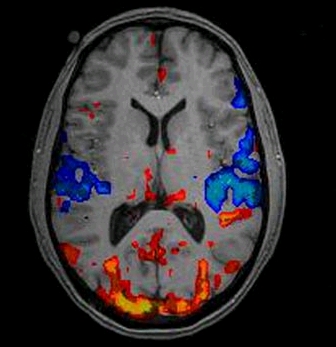
The latest chapter of this story comes from the highly publicized area of neurolaw. Applying cognitive neuroscience (and particularly brain scans) to legal questions of responsibility, neurolaw continues the mission of the hard determinists who claim that free will is an illusion, and therefore, Jackson, most substantive criminal law, and enduing cross-cultural intuitions of justice are flat-out wrong.
But despite all of the persuasive neuolaw talk (and pictures in particular) there are problems with the nurolaw model. As I discuss in this Article, we should skeptical of these claims for a number of reasons. Chief among them is the belief that a criminal code influenced by neuroscience would lend itself more easily to fairness, compassion, and mercy. On the contrary, there is every reason to believe the opposite.
DNA Popularity Leads To Lab Backlog: Law enforcement agencies have had so much success with DNA evidence that the demand has increased, but crime labs are unable to keep up with the current demand. Daily Comet writer Raymond Legendre reports on how the crime lab backlog has halted justice in Louisiana. Backlogging is also a national problem. A Department of Justice study estimates that 400,000 rape kits went untested in 2001. Delay, when dealing with a rape case, is a big issue because studies have found sexual offenders have a high rate of recurring behavior. Louisiana has a backlog, although the lab is good at completing the cases that are high priority. Those cases that are not high priority don't receive the same attention and enable those unidentified suspect to elude capture, becoming repeat offenders. Curtis Hinton is a good example of the problem. DNA evidence lead to Hinton being charged earlier this month, with a rape that occurred in 2006. The evidence collected from the victim was submitted two and a half years ago. Police are currently try to determine if Hinton commited other rapes during the time the DNA evidence sat untested in the lab. Increased funding could help elevate the backlogging problem. Increased funding could help elevate the backloging problem. But Louisiana State Police Sgt. Markus Smith says, "There will always be a backlog, it's just a matter of how great the backlog is."
November Execution sought for D.C. Sniper: Virginia Prosecutors are trying to set November 9 as John Allen Muhammad's (known as the D.C. Sniper) execution date. CNN writer Mike M. Ahlers reports that in a letter Virginia Prosecutors are asking the court to set a date for Muhammad's execution. In 2002, Muhammad and Lee Boyd Malvo shot 13 people, killing 10. The two are also suspected of other shootings and murders in Tacoma, Washington, Montgomery, Alabama, and the Washington D.C. area. Muhammad was convicted of killing Dean Harold Meyers and a Maryland murder. The court must hold a hearing within 10 days of receiving the letter, and must set the execution date no later than 60 days after the hearing.
After vowing that the Assembly's scaled-down version of the prison cutback would not pass the Senate, President Pro Tem Darrell Steinberg caved and let the Assembly version go to a vote. It was approved and sent to the Governor. Most importantly, the bill lacks Steinberg's pet provision to cynically create a commission with the power to rewrite sentencing law, for the purpose of insulating the Legislature from the political heat that would follow any major watering down. Kevin Yamamura, Steve Wiegand and Jim Sanders have this story for the SacBee.
Also on Friday, the Supreme Court denied a stay of the three-judge district court's order to prepare a plan for a massive throwing open of the prison doors. As I expected, Justice Kennedy referred the application to the full court. The order is here.
The application for stay presented to Justice Kennedy and by him referred to the Court is denied. In denying the stay, the Court takes note of the fact that the three-judge district court has indicated that its final order will not be implemented until this Court has had the opportunity to review the district court's decree.In others words, Judges Reinhardt, Henderson, and Karlton, don't think for an instant that denial of the stay indicates any kind of approval of what you have done so far. That kind of BTW note is unusual. Most denials are without comment. It seems to be a warning shot.
The Trouble With Closing Prisons: Today, at Sentencing Law and Policy, Doug Berman posted some excerpts from Jonathan Saltzman and Peter Schworm's Boston Globe article discussing Massachusetts fear that it may have to close down several prison facilities. Saltzman and Schworm report that the prison system is facing almost $100 million in budget cuts that could force widescale layoffs and the closure of several facilities. Harold W. Clarke, Commissioner of the Department of Correction, is apparently considering closing as many as four prisons and laying off 300 employees. Experts, like Leslie Walker, Executive Director of Massachusetts Correctional Legal Services, which provides legal services to inmates, are troubled by the proposal. "You have prisoners locked in a cell together for 19 hours a day, with a resultant increase in violence. It's a mistake that could prove tragic." If proposed budget cuts are adopted, the Department of Correction will "lose what it costs to run about four prisons." Some worry that if the prisons close there will be no place to put them, and inmates will "force-feed a reentry program that clearly wasn't supposed to be a reentry program."
Cannot Sue Defense Contractors for Abu Ghraib Abuses: According to Jonathan Adler at Volokh Conspiracy and Mike Scarcella at Blog of Legal Times, a federal court of appeals in Washington ruled today that a claim by Iraqi nationals were preempted and then affirmed the dismissal of their claims under the Alien Tort Statute. Adler's post gives brief overview of the decision, and then points to Scarcella's post at Blog of Legal Times. Scarcella reports that in Saleh v. Titan Group, Judge Silberman upheld a lower court decision granting summary judgment in favor of Titan, one of the government contractors, and reversed dismissal of summary judgment for the other contractor, CACI International. In the suit, plaintiffs alleged that Abu Ghraib prisoners were beaten, electrocuted and raped by the contractors. They also alleged wrongful death, assault and battery. The majority's decision to dismiss the claims appears partially motivated by its desire to prevent lawsuits that will "hamper military flexibility and cost-effectiveness, as contractors may prove reluctant to expose their employees to litigation-prone combat situations." Judge Silberman also noted that the plaintiffs retain rights under the Foreign Claims Act. Judge Merrick Garland dissented. He took issue with the majority panel's doubt on whether the plaintiffs were subjected to abuse, and wrote "[n]"o act of Congress and no judicial precedent bars the plaintiffs from suing the private contractors."
How Can We Improve Forensic Evidence?: CrimProf Blog provides a link to Caleb Groos FindLaw article, "Unproven Forensic Evidence: What to Do Next?" Groos article gives an update on the National Academy of Sciences' report identifying serious deficiencies in forensic sciences and calling for major reforms. The Senate Judiciary committee took up the issue this week to address what can be done to fix the deficiencies found in the National Academy's report. One of the remedies proposed by the Academy was a National Institute of Forensic Science to establish standard forensics practices and set crime lab accreditation standards. According to an NPR piece, citing a Senate Judiciary Committee staffer, such an Institute could be dead on arrival. Groos writes, "[e]conomic bad times make it difficult, as does opposition from groups including The National Association of District Attorneys, who do not want a new federal regulator overseeing local forensic practices."
Appeals Panel Reinstates Overturned Jury Verdict of Excessive Police Force: An appeals panel reinstated a jury's verdict of excessive police force after Chief U.S. District Judge Ernest C. Torres had overturned the verdict. Providence Journal writer Katie Mulvaney reports on the First Circuit Court of Appeals decision to reinstate the jury's findings that a Trooper used excessive force. Jennings' claims the trooper used excessive force while subduing him during the police raid of a Narragansett tribal smoke shop. The tribal smoke shop raid was to prevent the tribe from selling tax-free cigarettes. During the raid, there was a scuffle that required State Trooper Kenneth Jones to maintain his grip on Jennings because he kept resisting. Jennings claims his civil rights were violated because his ankle was twisted until it broke, although it is unclear when his ankle actually broke. On August 24, 2005, Torres overturned the verdict, (story found here) because he found that state police testimony was more credible than Jennings or other defense witnesses. The Appeals court found that Jennings' broken ankle proves there was excessive force.
Not Guilty Due To Asperger Syndrome: William Cottrell was prevented from presenting evidence he has Asperger syndrome during his arson trial. Los Angeles Times writer Carol J. Williams reports that the Ninth Circuit Court of Appeals, which initially upheld the arson conviction because Cottrell's disability did not rise to the level of "gross and verifiable disability" preventing him from understanding what could happen from his initial intention of vandalizing the SUVs with stickers, has revised this holding. In 2004, Cottrell was found guilty of arson for vandalizing and firebombing 125 SUVs. Cottrell believes that his Asperger syndrome proves he is not guilty because it prevented him from forming the specific intent to commit the arson attacks. Williams article explains that Asperger syndrome is a form of autism that impairs a person's ability to interact normally with other and inhibits understanding of facial gestures, body language, and other nonverbal signals. Currently, the U.S. attorney's office is reviewing the case to decide if they will take the case back to the trial court.
We must not forget that a major contributing cause of the disaster was our inadequate response to earlier attacks. We must not forget that there are people in the world who are just plain evil. We must not indulge the conceit that an inadequate response to evil somehow makes us enlightened or moves us to a higher plane. Far from it. Failure to confront evil is not compassion; it is cruelty to those who are victimized in the future in crimes that could have been prevented.
We have gone eight years without another terrorist attack on the United States. This is an accomplishment of people who learned from the mistakes of the past. Let us not forget. Let us not repeat.
• We're not interested in "occasional" blawgs--blawgs you name should be updated at least weekly.With the latter point in mind, let me state expressly that we are not campaigning for anyone to flood the page with nominations for C&C. (Of course, we don't mind if you do.)
• We'll ignore comments from authors suggesting their own blawgs. That's just plain tacky.
• Campaigns to flood us with comments about a particular blog will turn us off. And you don't want to do that, because the editors make the final decisions about what's included in the Blawg 100.
A Cluster Of Pedophiles: Local officials and experts across the country have discovered that most sex offenders move to the same areas. Fox News writer Edward Barnes reports that sex offender clustering is a problem throughout the country. The problem of pedophile clustering was brought to the polices' attention during the Jaycee Dugard case. Police found that Phillip Garrido was one of 100 sex offenders living in the area. Barnes writes, "Experts call that a recipe for disaster that could create far more danger to the public and undo all the work that imposing restrictive living measures for offenders has tried to accomplish." There is no national data on clustering, in the past it has been discovered during the investigation of a crime.
A Decreased Sentence For Possession of Child Porn: Some people believe that the sentence for possession of child pornography is too harsh and needs to be lowered. Law.com writer Lynne Marek reports, judges testified before the U.S. Sentencing Commission in Chicago to lower the sentence of those convicted of possessing child pornography. Chief Judge James Carr of the Northern District of Ohio and Chief Judge Gerald Rosen of Eastern District of Michigan claim that many people convicted on the offense are not threats to the community, but rather socially awkward first-time offenders. The Sentencing Commission is looking for feedback from those involved in the criminal justice system because it is the 25th anniversary of the Sentence Reform Act, and the start of the Commission. Much of the discussion is based on the 2005 decision in United States v. Booker. Booker made federal sentencing guidelines advisory rather than mandatory. Tomorrow, U.S. Attorney Patrick Fitzgerald, who oversees the Northern District of Illinois, will testify. He is expected to testify that the Booker decision has "aggravated the situation concerning child pornography."
California Death Row Inmate Hopes His Love Of The Irish Will Save Him: A creative death row inmate has written the Irish government, pleading with them to save his life. IrishCentral.com writer April Drew reports that Scott Collins has asked the Irish government to help him after he discovered that the government is against the death penalty. During Collins' prison term he started studying the Irish and fell in love. Collins is on death row for the abduction, robbery, and murder of Fred D. Rose in North Hollywood. Collins abducted Rose in Palmdale, CA, and forced the construction supervisor to accompany Collins to the San Fernando Valley. Collins then shot Rose in the back of the head. At the time of the murder for which is is on death row, Collins was just 21 -- and was just one month out of prison after a five year stretch.
"Uptick" for Sentences Below Guidelines: At Sentencing Law and Policy, Doug Berman posts on recent U.S. Sentencing data that shows an increase in below-guideline sentences. Preliminary Quarterly Data from the U.S. Sentencing Commission shows that of 57,846 cases, 1,034 were above guide-line range and 23,581 were below guideline range. 14,471 of these were government sponsored (meaning "the prosecution initiated, proposed, or stipulated to a sentence outside of the guideline range, either pursuant to a plea agreement or as part of a non-plea negotiation with the defendant") and 9,110 were not. Berman reports that the data shows "another...uptick in below-guideline sentences imposed by judges," with judges deciding 15.8% of the time to impose a below-guideline sentence. This is up from the 13.8% below guideline sentencing Berman noticed before President Obama's election.
The Economics of a Border Fence with Mexico: At Freakonomics Blog, Daniel Hamermesh writes that last week's horrific killings at the Ciudad Juarez drug treatment center demonstrate how "Fewer Drugs in America Means More Problems for Mexico." The murders, according the Hamermesh, are an example of "what happens in a market when restrictions on supply are imposed in a related market." Because of increased border enforcement it is harder to ship drugs from Mexico into the United States and Mexico's drug supply has increased. Increased domestic competition has pushed the price of drugs down in Mexico and caused an increase in Mexican drug addiction and the violence associated with it. Hamermesh opines "Sadly, I imagine that the new giant border fence will make shipping drugs to the U.S. even more difficult and result in still more addiction -- and violence -- in Mexico."
The Ninth Circuit Appeals Court Rules Against Trial Judge: Yesterday, the Ninth Circuit found that convicted sex offender Anthony Bernard Smith Jr. was denied the right to a fair trial because of instructions given to the jury. Chronicle staff writer Bob Egelko reports that the court found jury instructions given by a Sacramento judge were prejudiced toward the defendant. The Ninth Circuit decision is here. Anthony Bernard Smith Jr. and James Hinex were tried and convicted of breaking into a home and robbing a man and women, aged 71 and 56. Additionally, Smith was convicted of forcible oral copulation with the woman. During the trial, jurors were deadlocked for days on the copulation charge. Superior Court Judge Michael Virga instructed the jury to consider statements given by Smith and Hinex following their arrest and to look for consistencies and inconsistencies. The Ninth Circuit panel concluded that this coerced the jury into a verdict, and Smith did not receive his constitutional right to a trial by jury. Justice N.R. Smith dissented, because he was not convinced that the judge's instructions forced the jury to convict Smith of the copulation charge.
DNA Evidence Solves 24 Year Old Murder: Once again DNA evidence has given a family closure by solving a crime. North of England correspondent Michelle May reports that the murder of a nine your old boy was solved by DNA evidence. In July 1985, Imraan Ismail Vohra did not come home from school. Two days later his body was found raped and strangled in a park. After 24 years, DNA evidence found that Robert David Morley was responsible for this horrible crime. Unfortunately, Morley died in 1997, so he will never be held accountable in a court of law. Vohra's family stated that "As a family we would have liked to have seen justice in the courts, but justice will be done here after." Police continue their investigation into this case.
Overall, the high court gets a 61% approval rating, above the President and way above Congress. Only 19% think the court is too conservative versus 28% too liberal and 50% about right. Among Democrats, "about right" beats "too conservative" by almost 2-to-1. The breakdown among independents tracks the overall numbers.
Is the difference here because the people are looking back to cases such as Kennedy v. Louisiana, where even Barack Obama came down on the more "conservative" side than the court, while the academics are looking ahead to the campaign finance case? Perhaps that is part of it, but I think the main problem is that many in academia are so far to the left themselves they can't see where the middle is. Will the people change their view if the campaign finance case strikes down a big chunk of that law? I doubt it. I think most people have figured out by now that trying to purge the influence of money from politics is a futile effort.
Michigan prosecutors are suing the state Department of Corrections over the release of hundreds of violent offenders, alleging murderers and rapists are being paroled with little or no say from prosecutors.
"They're releasing these people at an alarming rate," said Kym Worthy, the chief prosecutor for Wayne County, Mich., who is one of three Detroit-area prosecutors leading the charge to get advance notice of parole hearings. "I had no idea that some of the most serious and most violent sex offenders were being let go, especially sex offenders."
DNA Link May Solve Multiple Murder Case: Milwaukee authorities have found a DNA link tying someone they believed to be a relatively minor offender to the murders of nine women. AP writer Dinesh Ramde reports that 49 year old Walter E. Ellis, has been charged with the murders of two women, and a DNA links him to seven other murder victims. In 1998, Ellis pleaded no contest to a reduced charge of second-degree reckless injury. Out of a five-year sentence, Ellis served three years. Police Chief Edward Flynn stated, "Yes, he does have a criminal history, his criminal history, however, does not lend one to immediately say, you know, 'prime suspect.''' In this case, there was no indication from Ellis' previous criminal history that he would have committed murder. A DNA sample taken from Ellis' toothbrush was what broke the case. There is hope that many cold cases will be solved through the use of DNA evidence. A 2000 Wisconsin law requires that convicted felons give a DNA sample. Additionally, the law requires DNA samples to be taken from any convicted felon in prison before or after January 1, 2000. As Terry Williams, the brother of victim Joyce Mims said, "[j]ustice one day is better than no justice at all." .
Louisiana Death Penalty: Over the holiday weekend, Doug Berman posted a "Detailed examination of the death penalty in Louisiana" on Sentencing Law and Policy. Berman's post is based on an article by Alison Bath in Sunday's Shreveport Times. The article, Louisiana death penalty: an eye for an eye or ineffective?, promises to be the first in a series "will explore reasons for an apparent slowdown of executions, the costs of seeking the death penalty and the increasing number of death row inmates who are exonerated of their crimes and those whose sentences are overturned." The series will also feature interviews with families of victims, prosecutors and defense attorneys. Bath's article on Sunday makes the case that implementation of the death penalty in Louisiana, one of the "most active death penalty states in the first 10 years after the death penalty was reinstated," has dwindled in recent years. Of the 27 men put to death since Louisiana reinstated the death penalty in 1979, 18 were executed between 1983 and 1988. Seven more were put to death during the '90s and just two were executed since 2000.
Ninth Circuit Decides Preventive Detention Case: At Volokh Conspiracy Orin Kerr posted on the Ninth Circuit's decision in al-Kidd v. Ashcroft, and speculated that the decision "added a new case to the Supreme Court's docket next year." According to Kerr, the Ninth Circuit held "that the post-9/11 practice of using the material witness statute to detain suspected terrorists is not only unconstitutional, but clearly unconstitutional, and that former AG Ashcroft can be personally sued for his role in it." Al-Kidd apparently had ties with a suspected terrorist who had recently been arrested and charged with fraud. When al-Kidd announced his plans to travel Saudi Arabia to study Islam, U.S. officials feared he was trying to leave the U.S. to escape U.S. authorities. The Department of Justice obtained a "material witness" warrant, ordering that al-Kidd be detained as a possible witness in the criminal case against the terrorist. Al-Kidd was was detained for 2 weeks, and released when he agreed to comply with specific conditions of release for 15 months. He then filed a civil suit alleging that his detention violated his Fourth Amendment rights and the material witness statute, and that his treatment during the detention violated his Fifth Amendment and Eighth Amendment rights. Kerr's post goes through each of the issues decided by the Ninth Circuit, and offers his analysis of the decision. Kerr believes the court's decision is "Partly Right, Partly Wrong." For Kerr, the key inquiry is what is the probable cause inquiry for national security detention warrants. Kerr's problem is that the majority opinion never addresses this question. This could be one reason the case makes it way to the Supreme Court. Ashby Jones also has this post on Wall Street Journal's Law Blog, and Jonathan Adler posted an excerpt from the opinion on Saturday. Howard Bashman rounded up press coverage for How Appealing.
As we noted here, counsel for Brown apparently decided while writing their merits brief that the sufficiency of the evidence argument that they had been making the whole time and that was the basis of the Ninth Circuit's opinion is simply indefensible. Further discussion of what a stinker the Ninth's opinion in this case is can be found in the previous post.
So what will the high court do next? Will they appoint an amicus to defend the judgment below on its terms? Maybe. Will they just vacate the decision to allow the Ninth to consider the alternative ground of ineffective assistance decided by the District Court but not by the Court of Appeals? That's my guess. Stay tuned.
The application is made to Justice Kennedy, as the designated Circuit Justice for the Ninth Circuit. Given the magnitude of the case, I wouldn't be surprised if he refers it to the full court.
Update: Lyle Denniston at SCOTUSblog has this post and the application.
BTW, while releasing a hospitalized prisoner might save the corrections budget some money, it would not save the overall government budget much. The hospital cost will still be borne by the taxpayer, just out of a different pot.
Thompson's piece notes that the panel "scolded the administration...." The case now moves to a venue where Judge Reinhardt has been the scoldee more than once.
Update here.
Notably, opposition to the investigation runs much higher among the attentive public -- Americans who say they follow news about national politics "very closely." Among this group, 36% approve and 63% disapprove of the investigation. On the other hand, a majority of Americans who follow national political news less closely approve of the investigation.
Comparing Texas' Prison Reform with California: At Grits for Breakfast, Scott Henson compares California's "partisan prison meltdown" with Texas' struggle over prison overcrowding. Henson writes that when the Texas legislature confronted the issue in 2003, 2005 and 2007 it did not turn the issue into a partisan debate. Instead, it approached projections that Texas' already full prisons would require billions in new construction to keep up their astronomical growth rate with bipartisan support. This led to laws requiring judges to sentence offenders to probation for first-offense, less-than-a-gram possession cases; revamp probation in order to provide more meaningful supervision and leave sentence lengths alone; and expand funding for diversion programs. Henson contrasts Texas' approach with California's "partisan meltdown characterized by tuff-on-crime demagoguery, not to mention gridlock in the face of federal court orders requiring" California to release inmates. He writes, "[i]ronically, California may be suffering because it's trying to confront this problem with a Democratic majority. The turning point for Texas' prison system came in 2003, when Republicans found themselves in charge..."
Prison Privatization: CrimProf Blog posts a link to Richard Culp's SSRN article "Prison Privatization Turns Twenty-Five: The Evolution of a Mature Private Prison Industry in the United States." Culp's article argues that the realities of the mature prison privatization market do not match the promise of innovation and quality improvements voiced by privatization advocates during the 1980s and early 1990s. He believes that with fewer companies running private prisons, and fewer states buying incarceration services "[t]he net effect is that any real cost advantages of privatization are marginal at best, private prison programs have become virtually indistinguishable from public prisons, and the promise of innovation remains unfulfilled."
And one for fun...Ashby Jones reports on Wall Street Journal's Law Blog on a Honolulu city council bill that would criminalize being "smelly" while riding the city's public-transportation system. Gordon Y.K. Pang covers the story in the Honolulu Advertiser. If it passes, the bill would give one more reason to choose Hawaii over New York for your next vacation. As Jones notes, "devoted riders of New York City's subway system...[have] had the occasion to smell some unholy smells."
First, the case has been kicking around a long time, and I do not regard the article as the kind of major event that demands immediate comment.
Second, and more importantly, the broader subject of innocence and the death penalty does not lend itself to the kind of "quickie" post I can dash off in a few minutes. When we do post on the subject, it will be one of the longer posts on this blog, and we will have to go over it carefully to minimize the ability of the more dishonest elements of the opposition to distort what we say. (We can never eliminate that possibility entirely, of course.)
CJLF has three briefs and two law review articles due this month, so in the short run blogging will be limited to things we feel comfortable writing and posting quickly. This case is not one of them.
Cheney is not wrong when he asserts that it is a dangerous precedent when a change in power in Washington leads a successor government not just to change the policies of its predecessors but to invoke the criminal justice system against them.
Leon Panetta, the conscientious director of the Central Intelligence Agency who, earlier in his government career, resigned to protest the policies of the Nixon administration in which he was serving, has disagreed with Holder's decision. He says it will have a harmful effect on the morale and operations of his agency, which has already taken strong steps to correct the policies he inherited.
The lack of an asterisk by the percent change figure in the table indicates that the "Difference is [not] significant at the 95%-confidence level." That is, we cannot say with 95% confidence that the change is real change as opposed to random sampling error. Does that mean we can say that the rate is unchanged? No! A limitation on our confidence that X is true does not equal confidence that X is false. The chances are considerably better than even that the rate did indeed drop. The slightly larger property crime drop of -8.1% with the same sample was deemed "statistically significant," so the violent crime drop was probably close to, but not quite at, the 95% confidence mark. This illustrates once again why confidence intervals should be stated expressly, not just indicated as meeting or not meeting the 95% rule of thumb. Different confidence intervals may be deemed "good enough" for different purposes.
Meanwhile, at SL&P, Doug Berman asks for debate regarding implications of "the fact that crime is now at record low levels in the US...." Sorry, but once again "what we know for a fact ... just ain't so." Crime levels are the lowest they have been during the time that the National Crime Victimization Survey has been operating, since the early 70s. However, the FBI data tell us that violent crime per capita is still close to triple what it was when the UCR began in 1960. In California, we have data back to 1952, and violent crime was another 1/3 lower in '52 than in '60.
We have made great progress in bringing crime levels down from the horrific peak of the early 90s. There is near universal agreement among knowledgeable people that tougher sentencing was part of that drop, while debate rages over how large a part. We cannot rest on our laurels, though. There remains much to be done.
Criticism of Sex Offender Article: On Sex Crimes yesterday, Corey Rayburn Yung posted a link to Wendy Murphy's opinion piece "Sex Offender Laws Flawed But Critical." In her op-ed, Murphy criticizes the Economist article, "America's Unjust Sex Laws," as a "puff piece about how sex offenders are treated unfairly and sex offender registries are barbaric." She writes that the Economist article did not reveal all of the relevant facts and "misse[d] the most important point of all - that the American legal system has historically perpetuated sexual violence by disproportionately failing to redress violence against women and children...." Yung agrees with Murphy that the American legal system has failed and continues to fail women and children in regards to sexual violence, but counters that because the problems in the the system are at the law enforcement and trial phases of criminal justice, increasing collateral restrictions on sex offenders does nothing to correct those deficiencies. In another, somewhat related post on sex offender registries, CrimProf Blog posts the lead-in to a New York Times article by Monica Davey on how the case of Phil Garrido, "Shows Limits of Sex Offender Alert Programs."
Supreme Court Retirement Speculation: At Blog of Legal Times, Tony Mauro reports on an Associated Press story that has bloggers wondering whether Justice Stevens will be retiring next year. Apparently, Justice Stevens has hired only one clerk for the October 2010 term, which contradicts his custom of hiring his full complement of four clerks for the term that begins a year hence. Mauro states that such speculation is often "inaccurate," but those who have clerked for the Justice in the past believe the move is telling, particularly since Justice Stevens will be 90 next year. Doug Berman also posts on the story at Sentencing Law and Policy, as does Jan Crawford Greenburg at Legalities. Greenburg points out that the reporter who broke the story, Mark Sherman, is the same reporter who let us know in April that Justice Souter hadn't hired any new clerks for the October 2009 term.
Off topic News Article on Unlikely Amicus Bedfellows: On Saturday New York Times writer Adam Liptak reported on the Supreme Court's decision to hear a new argument in the First Amendment case, Citizens United v. Federal Election Commission. Arguments are scheduled for September 9th. The case centers around "Hillary: The Movie," a documentary prepared by a conservative advocacy group called Citizens United. The issue is whether federal campaign finance laws apply to a critical film about Senator Hillary Clinton intended to be shown in theaters and on-demand to cable subscribers. Liptak reports that the court's order calling for re-argument "has generated more than 40 friend-of-the-court briefs," and has the ACLU aligned - surprisingly - with the National Rifle Association. The ACLU's usual allies have taken a different stance, arguing that allowing corporate money to flood the airwaves would pollute and corrupt political discourse. According to Liptak, the strange ACLU-NRA alliance comes from the ACLU's long supported position that regulation of corporate campaign spending may violate the First Amendment. He reports several others in the civil rights community disagree with this position.
California lawmakers may want to rethink a cost-cutting proposal to release at least 27,000 inmates from state prison in light of a new study linking parolees to increases in violent crime.
Led by UC Irvine criminologist John Hipp, the study found that, in most cases, reports of aggravated assault, robbery and burglary go up when parolees return to their neighborhoods - and that if they have violent backgrounds, murder rates increase.
Cite and abstract are after the jump.
How did [Jaycee's] alleged tormentor, Phillip Garrido, get out of prison in 1988, after only about 11 years of a 50-year federal sentence for a previous abduction?
The answer is in some ways as chilling as the question. Basically, there was no corruption; no major bureaucratic malfunction. The federal parole authorities who let him go were following standard procedure of the time. In fact, according to officials with whom I spoke, Garrido's 11-year stretch for a 1976 kidnaping and rape was relatively harsh in those days.As we debate changes in sentencing policy, we must never forget how disastrously lax our system became in the 60s and 70s. That was the thrust of my talk to the National Association of Sentencing Commissions last month, "Remembering, Hopefully Not Repeating, Past Errors in Sentencing Policy." In some aspects things went too far in the other direction and need to be pruned back judiciously, but we must never go back to the way we were.
Carol Williams has this story in the L.A. Times. "A majority of Californians still favor the death penalty, but their support has waned from 79% to 66% over the last two decades as fears of executing the wrongly convicted escalate, a researcher reported Tuesday."
Two decades? Why pick 1989 as the reference point? As the above graph from Gallup shows, the all-time high in support for the death penalty was in the late 1980s to early 1990s. Pick a number, any number. If you want to claim it is "down," just compare the present value to the all-time high. Similarly, if you want to claim it is "up," just compare the present value with the all-time low. If we were dishonest and wished to mislead, we would pump out press releases saying "support for the death penalty is up 22%," using 1967 as the reference point.
Gallup's last full report on the death penalty, last November, is here. The headline reads, "Americans Hold Firm to Support for Death Penalty." My post on that report is here.
All have their likeness emblazoned on fake ecstasy tablets seized by law enforcement (hat tip: Mindhacks). We have read it in blog comments, such as in this thread at SL&P. We hear it from callers to radio talk shows. People flatly assert that CJLF is funded by or otherwise joined with CCPOA. In this thread at Prison Talk, poster "madmusic" concedes he has found no direct connection, but he makes up a preposterously strained connection through a former state senator who long ago signed on as one of many amici on a pair of our briefs and now has a lobbying firm with a CCPOA connection. (For what it's worth, we have had no contact with him whatever since he left the Senate.)
Why are so many people so interested in finding a connection where none exists? As nearly as I can figure out, their purpose is to support an argument that our positions on policy questions have somehow been bought by someone with a financial interest in large prison populations.
So, for the record, CJLF has never received one red cent from CCPOA. That organization has no role in our decisions regarding what positions to take on matters of policy. Indeed, we have never had any discussions with them on policy questions during the time I have been legal director, over 20 years.
Some provisions are relatively uncontroversial, such as adjusting the grand theft threshold for inflation. This is a very old problem. See 4 W. Blackstone, Commentaries on the Laws of England 238-239 (1st ed. 1769).
Some changes are quite bad for the long term. Instead of earning time credits for working or even just not misbehaving, prisoners will now earn credits just for being warm bodies.
Fortunately, the worst of the Senate bill's provisions, delegating the authority to rewrite the state's sentencing law to an unelected commission, had to be stripped out to get enough votes to pass. The Senate leader says he will not allow a vote on the slimmed-down package. Okay, don't vote if you don't want to. No commission other than a strictly advisory one is coming out of the Assembly.
The
EZ-IO® Intraosseous Infusion system is a complete solution for
immediate vascular access in all patients larger than 3 kg. Used an
estimated 160,000 times across the world the EZ-IO® is the leading
choice for intraosseous access in all care environments from the
ambulance to the hospital to battlefield and beyond, the EZ-IO® system
is designed to help the medical professional gain vascular access in
seconds to provide intravenous therapy to patients. EZ to use, EZ to
train and EZ to maintain the EZ-IO® is the clear choice of intraosseous
solution for medical professionals and the best method to gain
immediate vascular access...when you need it most.